
Episode 205 - Leaders On Leadership With Gary Hillerich

Is the price of leadership worth paying?
Leadership isn't just a title—it’s a process, often marked by loneliness, weariness, and the weight of tough decisions. In this episode of Tremendous Leadership, we sit down with Gary Hillerich, a veteran attorney with 47 years of experience, to pull back the curtain on what it actually costs to lead.
From the transformative power of daily affirmations—a practice Gary has maintained for over 40 years—to the art of 'getting barriers down' to truly connect with others, Gary shares the pragmatic wisdom that kept him inspired through decades of law practice. If you’ve ever felt the weight of being a leader, this episode offers the roadmap to help you persevere, stay focused, and keep your vision clear. Tune in to learn why the price of leadership is tough, but why it’s always worth it.
---
Watch the episode here
Listen to the podcast here
Leaders On Leadership With Gary Hillerich
Everyone, I’m here to introduce you to the latest episode of the Leaders on Leadership show, where we pull back the curtain on leadership and talk with leaders of all ages and stages about what it takes to actually pay the price of leadership. I am very excited to introduce you to my guest, Gary Hillerich. Let me tell you a little bit about Gary. Gary Hillerich is an attorney practicing in Louisville, Kentucky, where he has built his career in law.
He and his wife, Vicki, had been married for 49 years, and together they have three tremendous daughters, three tremendous sons-in-law, and six, sometimes tremendous, he put that in there, grandkids, three boys and three girls. Gary found his way to me through an email where he shared his lifelong love of Charlie “Tremendous” Jones, whose message reached him decades ago and still resonates today. Gary, welcome. We are delighted to have you here.
Thank you, Dr. Jones, for having me. It is a real pleasure.
Life Is Tremendous
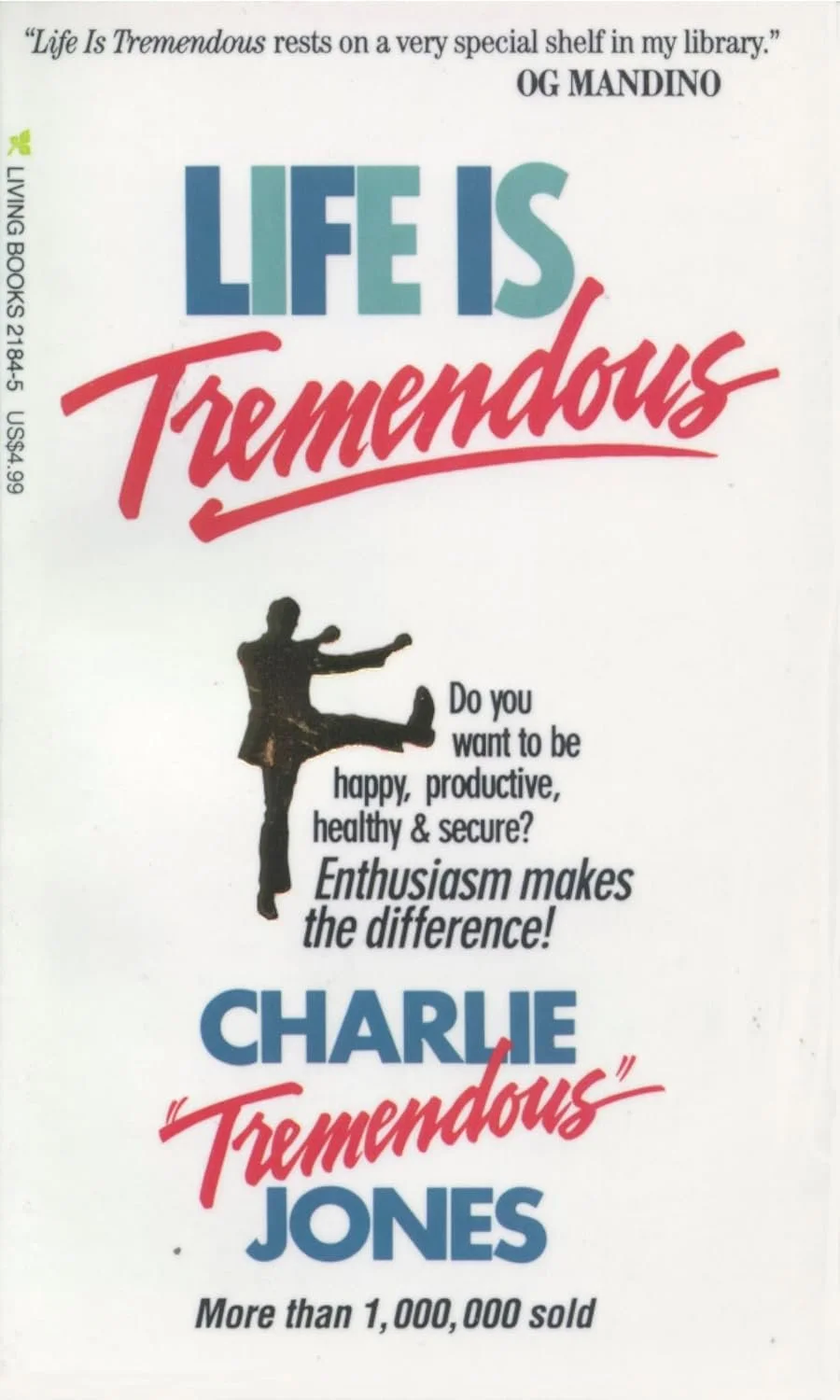
You are so welcome. Gary, could you please call me, Tracey, for this? I appreciate you using my title. Brother and sister here. The email that I got from Gary for our audiences, he had recalled, of course, some of Charles's jokes. He had heard a recording, a vinyl, and I do have a lot of my dad's vinyl. He said it was a speech where he talked about the kid who had the $5,000 puppy for sale. If you have never heard that joke, it is in Life is Tremendous. You need to get that. Gary, do you want to share about the first time you either heard my father in person or first heard his messages?
The Influence Of Charlie Tremendous Jones
I was given a tape, a copy, maybe a third generation. I would say it was in 1977 or 1978. It was before I got out of law school. I listened to it, and he was absolutely, no pun intended, tremendous. He truly was. He is the gold standard. I was hooked. He started me down the motivational trail. After Charles E. Tremendous Jones listened to Zig Ziglar, Denis Waitley, Norman Vincent Peale, and so many others. Charlie was always the gold standard that I went back to.
I would think that I probably listened to that tape without exaggeration several hundred times over all of those years. I just kept playing it. When I needed inspiration, when I was a little bit down, I would plug in Charlie E. Tremendous Jones, and he would bring me up. It was his humanity. As he often says, he puts down the barriers, and he connects in such a way that he would inspire me. I listened to him repeatedly. In any event, after so many years, I gave that tape away to a dear friend who is now deceased. I lost it. That is why, Tracey, I contacted you because I wanted another.
We are still sorting through. Have a lot of stuff you guys can get on our website. We have a lot of stuff digitized. Gary, I am not sure if you know this, but under the Tremendous Life Books, there is a YouTube channel where I have put up everything that anybody sends me. You may even be able to find it there, looking for it. It just came to your mind that particular day, and you thought, “I am going to check out.” Did you just Google Charlie Tremendous Jones, and we came up? Is that how you found us?
Yes.
Good. He got online. He got some DVDs, and now we are lifelong buddies and able to continue to supply his motivational personal development fix. Gary, thank you so much for sharing that. Do you want to show the book that you have, too?
Yes. I found this. I had not seen it for some time, but it is a 1983 copyright that I have on my desk. I pulled it up many times over the years, but I have candidly not looked at it in the last six months or a year, but I found it, and it means a great deal to me. That is Charlie.
Thank you, Gary. We are going to get into one of the things, and just so you know, Life is Tremendous. It is still out there. It has never gone out of print. First came out in 67, so it is people like you, Gary, that are resonating with the message and sharing. We are going to talk about another one of my father's speeches, one that had some humor in it. As you said, it was humanity, and he talks about the price of leadership.
His point is, if you are going to be a leader in reality and not a leader in name only, as we say, there is a price you are going to have to pay. It is a tough price, but it is so worth it. Aguirre outlines four different things to be prepared for. The first of those that he talks about is loneliness as a leader. We have all heard about that. It is lonely at the top. Can you share with us from your experience as a leader, maybe a season where you experienced loneliness? For our audience out there, what resource might you share with them to help them if they are in that space?
The Loneliness Of Leadership
First of all, I would never claim to be a leader. Having said that, what I do in my practice, I am a plaintiff personal injury lawyer and I have handled, I have been practicing now 47 years so I have handled hundreds of death cases, every type of injury imaginable, not to be negative, but I have seen people come through crisis, catastrophe. The human condition, the way they come through it, is truly amazing. I have experienced that. It is tough as a lawyer to even hear these stories, but for people who actually go through it, I cannot imagine. Anyway, in these cases that I handle with respect to loneliness, you say, every case I handle, if I am going to trial, you cannot be led by a committee.
There comes a time when a decision has to be made. If there is money on the table, if a case is going to settle, if it is not going to settle, it is a lonely decision. The client does not need someone to equivocate. I need to be reasonable. I need to look at the facts. It is a lonely decision to make because I can have a tremendous effect on someone's life, and have one way or the other. When you say a resource, I would say it is based primarily on just experience, scars, going through the process, and having years upon years of experience. It is a lonely decision.
I am so glad you used that word, equivocating. That is good to let people know that, because in today's leadership world, and by the way, the fact that you say you are not a leader means you are. I will say you're a leader because I had to laugh when you said that. I am like, “That means you are what, Gary?” A lot of people will sit there and say, “With leadership, none of us is as smart as all of us.
We know that we are constantly looking for feedback, support, and advocacy, and people are pouring into us.” As you said, when it comes down to who signs that or who says yes or no, when something is on the table, it is up to the individual. That is a wonderful reminder that in the end, there are a lot of things in life that only you can sign on the dotted line for, and that can feel lonely. As you said, get your counsel and stay prayed up, but then you have to go with it.
It reminds me of what I have heard Charlie say so many times on that tape, “Make a decision, make it yours, burn it into your heart and die by it.”
Absolutely and die by it. He also said he never saw a monument in a park dedicated to a committee. That was the other thing he would always say to. He understood sooner or later, you've got to put love into that. “Make a decision, make it yours and die by it.” I love it, Gary. The next thing he talked about was weariness. I can remember him telling me, “Tracey, as you go through life, you are going to be surrounded with some people that do more than what you have asked of them, but the vast majority are going to do less.”
It was not that he was dogging on people. I know how Charles loved people, but he was, like I said, he was very pragmatic. He is like, “It is going to be tiring, and you are going to go through seasons of weariness.” Watching him as a little girl grow up, I saw when he would enter that. Can you share with us your seasons of weariness? Again, how did you navigate out of them?
Handling Weariness Through Preparation
As I believe Charlie said, “Preparation, preparation, preparation. When I get ready to try a case, only I can get it in my head. Only I can do that. What I do, no matter how big the file is, I will go home alone. I totally took the file apart and reassembled it. Until I know everything in it. It is preparation, preparation, preparation.” There are so many nights clients will not have a clue, and they should not, but I have always been told if it looks smooth, it is not happenstance. It is because you are prepared. When I go to court, I have worked many nights well into the early morning hours, not because I wanted to, but because I had to. You have to be prepared, and weariness is part of it. You have to put in the effort, or you are not going to get anything back out.
You have to be prepared. Weariness is part of the journey. Put in the effort, or you'll never reap the rewards.
That takes us into the next point, which is abandonment. Abandonment is not fear of abandonment or abandoning a spouse or a pet. Charles always told me that he did more in a day to contribute to his failure than to his success. I said, “That does not compute.” He said, “It’s because it is so difficult not to want to focus on what you like and want to do and not what you ought and need to do.
You hit that on with weariness. It is not that you want to work late, but you have to. That is going to be draining. Talk to us, Gary, about abandonment. I know you shared with us how you stay really singularly focused on a case, but can you share with us how you deal with that? I know you have got a lot of demands, a lot of things that pop up. The law is changing, and you are a father, a husband, a grandfather, all those other things.
I remember again on the tape that I listened to so much of Charlie. He said, “They do not pay me much money to do the things I really like to do, but they paid me $25,000 to do the things I did not like to do.” Learning how to do what you need to do and learning how to love what you need to do is transformative. Again, Charlie really made an impact on me with some of these statements. You just simply must enjoy the ride. The more you work, the more you put into it, the more satisfaction you get out of the work as you put into it. You do, I find that when everybody loses cases, but when I win a case, it is almost a letdown in some respects, because the process, all the work of getting there, is what is really enjoyable. That is what it is.
That is. Charles would say that work is the great healer for everything. You work, you are sad, you work, you are depressed, you work, you feel like a failure, get in there and work, because the worst thing you can do is turn around and just start sucking your thumb. Gary, I love that you said learning to love. Many of us, “I do not like this. I am not feeling it.” Just like marriage.
He would say to Gloria, “Honey, I do not feel like I am married.” Do you know what I am saying? He says, “What if I had rolled over and said that in week three?” She is like, “Don't you talk so stupidly.” I love that you talked about anything that God has put in our laps and set us about to do and place us in that position. You can learn to love. I love that you said that it is a process.
I tell young people all the time, just do it. Activity. Just get out and do it. Take a step. I have had so many times in my life where I have been so afraid of things, and I have had my knees knock, my voice crack, and I tell young people that do not be afraid of being afraid. Do it. Take a step. As the old saying goes, “You can eat an elephant one bite at a time.”
That is one of the things we need to abandon is that fear, because that will pull you off course and have you second-guessing yourself. I am glad you said that because we see lawyers and we think they already know everything, and what is going to end up, and you guys go through it just like us.
Same. We are no better, no worse. We are all in it together.
I love it, Gary. We talked about loneliness. We talked about weariness. We talked about abandonment. Now, the last point my father talked about was vision. I can remember you mentioned some of them, Charles, and then Zig Ziglar and Jim Rohn. I grew up watching all these visionaries, and I am like, “I get it, but they speak a language I do not think I will ever speak.” I can remember discussing those with my dad, and he goes, “No. Vision is simply seeing what needs to be done and then doing it.” It’s very practical, you know what I am saying? What you want is attraction, but as you said, the root word is action, doing it, just do it. How do you cultivate your vision in life for your family, or what is for the business?
Cultivating Vision With Affirmations
Very interestingly, I started doing affirmations years ago, and I set my goals. I actually have a tape that's fifteen minutes long that I created probably in the early ‘80s with affirmations on it. I probably listened to that thousands and thousands of times. The vision on it, for example, one of them would be I radiate calm, strength, and stability. I maintain my weight at 160 pounds, the vision. I can tell you that in 40 years, my weight has not fluctuated by five pounds.
Now, I attribute that to the vision in the affirmation. They are extremely important. I picked some of that up from, or a great deal of it from, Lou Tice. There are a number of people who use affirmations, but I think that they are very important because many of my affirmations that I made 40 years ago have come true. Simply stated, you take a step, you see how far you can go, and you have a concrete goal. You must have some type of goal. I encourage young people not to sit, but to be brave with their goals. Do not sell yourself short. You never know where you are going unless you set that goal and set it big. Set it big, dream big, believe big, believe in yourself. That is vision.
Don't sell yourself short. Set big goals, dream big, believe big, and believe in yourself. That's what vision is all about.
I love it. That takes us to the Sibkis principle, right? See it big.
Keep it simple.
That is what the $5,000 joke is all about. See it big. I cannot tell you, as I said, you have to get Life is Tremendous to read it. Tell me about, for our audiences out there, again, and I am an auditory learner kind of thing, but I have never recorded fifteen minutes of my affirmations. Walk us through that. Do you hit all the different areas of your life? I love the specificity, but if our audiences are out there, I think one of the key takeaways they are going to do is to record this. You said fifteen minutes. Can you walk us through that? How did you come up with that? Have you changed it since you recorded it back in the ‘80s?
I have not changed it. I still have it on my phone and Dropbox. What I did and I even experimented a little bit with subliminal messages or subliminal music in it. I do not know whether that had any effect or not, but I recorded our sit-down and thought about what my goals should be and would be. I wrote these down in fifteen minutes, but I repeated them on the tape six times. When I start out, I radiate calm, strength, stability, and wisdom.
I maintain my weight at 160 pounds. I repeat that six times. I just put it in the car or at home, whatever, and I will listen to it. It is fifteen minutes long. Some days I will listen to it two or three times. Some days, one time. That is basically what I did. I gave a great deal of thought to what those affirmations should contain and the wording of those affirmations. They are very positive. There is no negativity whatsoever in those affirmations. I say them as if they are already achieved. They have been useful.
The subconscious is where everything happens. There is a reason for that. That is why God made our fabulous minds, which we have the mind to deal with. Thank you so much for sharing that. I know our audiences are going to be doing this. I know I am going to sit down and record mine. I have journals and journals upon them written, but I love that you shared that, Gary. I love your attitude and what you shared. It is probably why, Gary, you are probably the only lawyer I have seen online who has all five-star reviews. Did you know that?
No.
For any of you who have used lawyers, it is like, “There are always people who are really happy, and then there are a lot of people who are really upset.” I am like, “Wow.” I knew you were tremendous, but obviously, in your zone of expertise, you are. Gary, anything else we talked about loneliness, weariness, abandonment, and vision, anything else that you would like to share with our audiences on what it takes to pay the price of leadership?
Getting The Barriers Down
I would simply say that again, going back to Charlie, get the barriers down. If you really want to communicate with people, get rid of the arrogance, get rid of the things that separate us. It does not hurt to smile. It does not hurt to say a kind word. Put the barriers down and let somebody really see your heart and see who you are. Once the barriers are down, it really opens up and facilitates conversation.
He would say that you cannot have communication without identification. There is a wall up there, and no matter how brilliant you are, compelling it is, or you give somebody a million dollars, you are not communicating. Unpack this. In your profession, it seems like it is very much the line that is drawn, the enemy is over here, and the other side is over here. Can you share how you have applied that in your professional vocation?
The line is drawn on many occasions, but it is amazing how, when the barriers come down, they are in a mediation. I recently was in mediation in a large case, and we had fought the case for years. We were in the mediation, and the barriers ultimately came down. Once the barriers came down, I started seeing their side of it. They started seeing my side of it. Before you knew it, we resolved the case. It is just getting the barriers down. Letting your humanity show.
As I said, Gary is in Louisville, and I have to show you this. I went to the post office in Boiling Springs a couple of weeks ago, and the postmaster pulled out this really long box that said, "Clearly, it was a baseball bat.” I was thinking, and I looked at her. I said, “You must have that mark on.” She goes, “No, this is for you.” I recognized Gary's name on it. Gary got me this fabulous Louisville Slugger. Look at that with my name on it. It is so tremendous. He put a note there. He says, “This is for when you go speaking so you can take it up on stage and tell people they can hit a home run in their life.” He got one for my husband, too. Mike said, “He wanted to have them framed with one of our wedding pictures in there.” I said, “No, we are not going to have that.”
Just do not hit each other with them.
I know. I could put it in there. I thought that I would leave it to a Marine to come up with that. Again, Gary, thank you so much. Gary, how do people reach out and get in touch with you?
Office@GaryHillerich.com. May I say one more thing about Charlie?
Please, Gary.
My mentor died back in 1995, and at his funeral, Frank Haddad was his name. I was one of the people who gave his eulogy, and this applies to Charlie. I said one thing about him that he was not so great because he was superhuman. He was so great because he was so human. He represented, as does Charlie, the best that the human condition has to offer.
Thank you, Gary. For audiences out there, you know how I love talking about leadership, but when I get people that actually met my father and are still sharing this and living this. Gary, I just know you are embodying everything that he taught and paying the price, being so human and connecting with other people. Thank you for what you shared with our audiences and what you shared about my father. It means a great deal.
Thank you for having me.
You are welcome, Gary. For listeners out there, if you like what you heard or think somebody else could be inspired or informed by it, please be sure and hit the like button, share it with others. Also, if you would leave us a five-star review, that would really help get people to find out what is going on with us. Never forget, you will be the same person five years from now that you are today, except for two things. The people you meet and the books you read. You just met the tremendous Gary Hillerich. You just heard about the book that he read back in the ‘80s that is still connecting us today. What a blessing it is. Just to our tremendous leadership fans, thank you so much. We could not do it without you. You all have a tremendous rest of your day. Bye-bye.
Important Links
About Gary Hillerich

Gary Hillerich is an attorney practicing in Louisville, Kentucky, where he's built his legal career. He and his wife Vicki have been married for 49 years, and together they have three tremendous daughters, three tremendous sons-in-law, and six grandkids—three boys and three girls. He found his way to us through a lifelong love of Charlie "Tremendous" Jones, whose message reached him decades ago and still resonates today.