
Episode 206 - Dr. David Schroeder - Leaders On Leadership - Unpacking The Price Of Leadership
Leadership can often feel like a lonely road, but understanding the true Price Of Leadership makes the journey worth it. In this insightful conversation, Tracey Jones sits down with Dr. David E. Schroeder, President of Pillar College and Founder of Masterworks, Inc., to discuss how to lead with divine purpose. Dr. Schroeder shares lessons from his decades in ministry and Christian higher education, emphasizing the necessity of maintaining vision and serving others. As the author of Follow Me, he provides a roadmap for staying abandoned to your calling even when the work becomes weary. Join us as we explore what it truly means to lead with a servant’s heart.
---
Watch the episode here
Listen to the podcast here
Dr. David Schroeder - Leaders On Leadership - Unpacking The Price Of Leadership
Connecting Leaders Across Generations
I am very excited to introduce you to Dr. David E. Schroeder.
‐‐‐
David, welcome.
Thank you, Tracey. I'm so glad to be with you.
Thank you. Let me tell you a little bit about Dr. Schroeder. Dr. David E. Schroeder is the President of Pillar College in Newark, New Jersey, and has served as president of 2 Christian colleges and 2 seminaries for almost 40 years. He's also the Founder and the President of MasterWorks, Inc., an international disciple-making ministry. He and his wife have been married for 59 years and have 3 children and 8 grandchildren. That's a tremendous return on investment there.
Also, two great-grandchildren.
I need to add that to the bio. I got to put that in there. That's tremendous. Our readers are always like, “How does Tracey meet these great people?” Let me tell you. David was at an ABHE, Association of Biblical Higher Education conference, where he saw Dr. Peter Teague. He is one of our two-time authors, who is one of my spiritual mentors, whom I had the joy of serving with when he was President of Lancaster Bible College.
Peter gave out his book,Jesus Leader. David looked at it, recognized the kicking man icon on it and the word tremendous, and said, “I think I know that.” David reached out to me. We go way back. A lot of you know I'm in South Central Pennsylvania. I grew up going to a Christian Missionary Alliance Church off of Erford Road. David was there. His father and my father were dear friends. He supported him at the Christian Publication Institute or CPI. David's siblings were friends with my siblings. The connection was tremendous. I immediately said, after hearing more of what's going on in his world, “David, would you please do us the honor of being on our show?” He most graciously said yes.
Our families go way back, for sure. Your father, Charlie “Tremendous” Jones, I knew him. I was a kid when I met him. I knew four of your siblings. You were probably born about the year I went away to high school, so I didn't know you then, but our families did. Our families were involved in the start of that church before it even went over to Erford Road in Camp Hill. That's how far we go back.
That's amazing. To be reconnected at this stage of life is so wonderful. I'm going to get right to it. You have an interesting, unique perspective because you knew Charlie “Tremendous” Jones and all about the Price of Leadership. This is a speech that he gave many times. Those of you who know my father know he was very pragmatic about leadership. It was a joy, but it was also a calling not for the faint of heart.
In this little speech, he talks about how if you're going to be a true leader and not a leader in name only. There's a price you're going to have to pay. That price involves four things. The first of them is loneliness. I can hear our readers going, “Been there. We hear about it.” Can you unpack what loneliness looks like for a leader, maybe a time when you went through it, and how you got out of it?
Navigating The Loneliness Of Leadership
When you're not the leader of an organization, everybody relates to you as a friend. When you're the leader, they relate to you as the boss, the guy, or the woman who signs your check. It's a very different feeling. In a way, you lose a lot of friends. You still know them, and they know you. You're friendly with each other, but the conversations change dramatically. That's where loneliness comes in. It has to do with transparency because people don't relate to you the same way.

Price Of Leadership: When you're not the leader of an organization, everybody relates to you as a friend. When you're the leader, they relate to you as the boss, the guy, or the woman who signs your check.
A lot of pastors have the same experience. A pastor comes into a social gathering, and all of a sudden, the language cleans up, or they stop serving a certain beverage. There's that kind of loneliness. If you think about loneliness, the one thing that can help a leader is to develop a hobby that's not related to their work and meet people at that level where they don't see you primarily as the leader of XYZ organization, but as a partner or a player involved in your hobby.
Unfortunately, I don't have any anymore. I did for a long time when I still could be much more active in sports, but not so much anymore. There is that loneliness factor. You have a lot of acquaintances. Everybody will be friendly to you, maybe except the bill collectors, but it's a surreal factor in leadership. Loneliness becomes part of it. You may not know it until you get into it, but you soon find out.
It's good to let our readers know that it happens to everybody. I like that you talked about being a friend, and then you go into friendly. It's a different boundary. You're in a different role. I think about Paul saying, “You're not babies anymore. Grow up. Eat meat.” We're constantly pushing into new boundaries and spaces. I think of Jesus with his inner circle, his three, and then the twelve. Different people get to see you in different spaces. If you're not prepared for it, it is lonely.
It's important for us to overcome the sense of loneliness by being authentic, being the same person that we are. Whether we're with board members, staff members, clients, or customers, be the same person and let others decide how friendly they're going to be. In fact, I have some board members with whom we are friends regardless of our work together. It's always good to know who those people are. They will come to you, or you can go to them regardless of the magnitude of the problem or the issue you're facing.
It's important for us to overcome the sense of loneliness by being authentic, being the same person that we are.
I love that that's a tool that you gave people. Be authentic and let people decide where in that boundary space, they're going to fit in. Some will come back into that, but not all. I love that authenticity because that's what we're evaluated on. It is how well we fit that role, and then it's up to everybody else to come.
What a great way to say it. Thank you for that. For our readers out there, if you're navigating that space, it doesn't matter how old you are. I'm stepping into different roles all the time, where I was once one of the masses, and even with our neighbors. Here we go again. I'm wearing a different hat, so people look at me differently. It's something I always remember.
It's one of the liabilities of leadership, but it's an upgrade asset as well for you to have influence in some ways that you wouldn't have if you didn't have the role as a leader.
Overcoming Weariness With A Divine Filter
I love that. Therein is the trade-off. Some look back at what was, but what's to come is a natural progression. If it were easy, everybody would do it. Everybody would love everybody. We talked about loneliness. The next thing my father talked about was weariness. He was always very clear with me, like, “Tracey, in working with people, you're going to have a handful of people that do way more than what you expect, but there's going to be a lot that don't.”
I hate to make a Theory X or Theory Y kind of thing, but he was used to dealing with people. It is what it is. I don't know anybody who would say, “Everybody I've always worked with far exceeded everything.” It's like, “That's amazing, but not even Jesus had that.” Talk to me about weariness. How do you stay at the top peak of your form? You told me you were 80 and coming back in to run a college again, correct?
Yes.
Not for the non-strong. How do you do it?
By God's grace, help, and strength. The weariness factor has a close relationship to your personality. We've probably all taken the Myers-Briggs and all of those tests that help us get a mirror to our personality and even into our soul in some ways. Certain kinds of people wear you out, and you get very weary trying to stay in a relationship.
Other people are life-giving to you, and you need to make sure that you have some of those people around you. Even those who wear on you, maybe there's a call on your life to help them get beyond that kind of situation. Most leaders are oriented toward being either workaholics or, as was said about my sister, Diane. I don't think you knew her.
She worked for the provost at Michigan State University for many years. When she retired, she couldn't stop. She created an organization called Grandma's Comfort. They made and gave bags of goodies to homeless people, mostly moms. Her counselor said to her, “Diane, you're not a workaholic. You're a mission-holic. You have to be involved in serving people as part of your mission. It's not bad, but it can make you weary as well.” At least in my case, work doesn't weary me. People do.
I love that. I concur. It's the old, “Ministry is wonderful if I didn't have to deal with the people.”
I've heard pastors say that. They’re like, “I love being a pastor. It's the people I can't deal with.”
It's a fact. I love that you said that. Be alert to it. I love that you talked about some of those people. I always say to people, “When you're weary, are they annoying you, or are they stopping the mission?” If they are annoying you, I love that you said to help them get beyond whatever it is. Remember, people helped us. We weren't always these finely sharpened, rightly dividing the word of truth people we are now. We were pretty out there, too, and somebody spent time with us.
One of the things I've learned from reading the gospels is that nobody was an interruption to Jesus. The disciples thought they were. “Don't bother with these children. Don't bother with those lepers or those blind people.” No one was an interruption. He could see that he had something to offer, regardless of who they were. I'd love to think that I'm that way. I'm not that way.
In fact, one of the things I do sometimes, not every day. Especially when I have a busy day lined up. I pray that God will screen out from me any interruptions, and that I could then see that anything that comes my way comes through a divine filter. I have a role to play in their life, or they have a role to play in mine. Maybe it's something I need to learn from that person, and God is going to teach me that way. What sometimes can be helpful is to realize that no one was an interruption to Jesus. He ministered to all freely.
We can stop the show because that was so good. I love that. He wasn't, and everybody else was trying to shield him for that. That's brilliant. You talk about the prayer to stop the wearisome that makes us weary versus the divine filter to see that this is not an encumbrance. This is somebody who needs to come to you for whatever reason, the divine appointment.
We talked about loneliness and weariness. The next thing he talked about was abandonment. I can remember my father telling me this. I was probably in high school. He was in his basement office working, and he was reflective. He goes, “I do more in a day to contribute to my failure than to my success.” I'm like, “Are you crazy? What do you mean?” He goes, “I spend as much time on what I ought and need to do as on what I like and want to do.”
His whole thing was abandonment, staying purely, singularly, and spectacularly focused on the task at hand and what you're supposed to do. The personal development space has no shortage of ways to stay away from the fear of missing out and the bright shiny things. With all you've got, and then you've got this ministry on the side, how do you stay abandoned to your best and highest calling?
Abandonment: Staying Focused On Your Calling
I'm glad you're framing it that way. When I saw that word abandonment, I thought you were talking about abandonment from people, like people abandoning you.
We know that happens. Get over it.
That's the loneliness part. It relates to what I'm called to do. I turned 80. I have the saying, “If you're not dead, you're not done. If you're a believer in Christ, if you are dead, you've begun because our real mission is yet in the next world.” It is recognizing that God is keeping me alive and giving me whatever I need to do because He is calling me to something. It's a privilege and an honor.
I stay abandoned to Christian higher education because I'm a missionary to the next-next generation, in a way. It's in me. It's how I'm wired. It's easy to be abandoned to something that you believe is in your core. It's in your soul. I know your father felt that way. My father felt that way about publishing. It was in their blood. I've mentioned before that I don't have any hobbies other than writing. That's where we're connecting as well.

Price Of Leadership: I stay abandoned to Christian higher education because I'm a missionary to the next-next generation. It's in me. It's how I'm wired. It's easy to be abandoned to something that you believe is in your core.
You can stay so focused on the things that you know count for eternity. That’s what keeps me going. You're right. I tried to retire in 2021. The succession plan didn't succeed. The school that I was president of was not doing so well, so the trustees asked me to come back. I didn't even have to think or pray about that. I was so eager to do that because I saw it was happening, and I didn't want it to happen. I'm back.
You abandoned that retirement path, and you went right back into it. I love that. You're right. Charles would agree with that. I'm glad you didn't say the word retirement in front of him. He would get very upset. He would smack people and say, “Don't talk so stupid. Retirement is not in the Bible. What if John had retired in exile on the island of Patmos?” His thing was that work is more fun than fun. When you're in that zone, you count it all as joy.
That’s true.
That's what you're doing. I am thrilled that you and your beautiful wife were so abandoned to that. You're back up East and ready to come at this again. We talked about loneliness, weariness, and abandonment. Lastly is vision. I read your writings. He had sent me a manuscript for the audience, and I'm like, “This is like a modern-day apostle Paul.” You guys know how I feel about Paul. I'm trying to go to bed, and I'm reading this on apostolic urgency. You know how that gets me going, so I was so excited about it.
Building Vision Through Core Values
When you're around great people like Dr. Teague and yourself, a lot of us are like, “They're visionaries.” I hear a lot of people I coach who say they're not visionaries. My father always said vision was seeing what needs to be done and then doing it. For us mere mortals who don't feel like we're touched with the strategic gene, where we’re like, “I'm way more tactical than I am strategic,” how do you stay focused on the big picture? What did you say? If you're not dead, you're not done, and if you're dead, you've begun?
Vision comes from values. The person who started this college didn't start with the vision. They started with values. The value, in this case, was Christ-centered higher education, something to help young people become biblically literate. This is a Bible college. Dr. Teague, for those wonderful years, was at Lancaster. Not long ago, I was with my granddaughter, who is turning a senior in high school. I'm saying, “You're taking a strong look at Lancaster Bible College, right?” She said, “Yes, I am.” They've already visited. I know the values of that institution that built the vision that they're following.
The vision has to come from God. Vision never comes out of a committee. We have boards. Boards are great. We have faculties, in our case, in education. They don't breed vision. God raises up leaders and gives visions to them, and then they call around themselves, those who agree with the values and the vision that is to be pursued.
The vision has to come from God. Vision never comes out of a committee.
I had a pastor. My mentor, Dr. Paul, said, “Schroeder, you've got about ten ideas every day, and occasionally, one of them is good.” He was honest. When it is a vision that comes from God, there's excitement. There’s an adrenaline rush. You realize, “This is not just a good idea. This is something I need to invest in.” It always has to do with serving. Every vision that's worth pursuing involves serving.
My pastor in Jacksonville one day threw out a statement from the top of his head. I use it frequently. He said, “If serving is beneath you, leadership is beyond you.” That's true. No matter how high and far a person goes in their leadership, we still need to be as Jesus, the man with the towel going around, figuratively at least, washing people's feet and being willing to take the lowest role and help out.
I make it a practice of mine to walk around our campus and try to see the people regularly. I'm not, by nature, an extrovert, but I know it means something to them that I'm aware of, and I appreciate their work. It builds coherence for our institution. All of this comes out of a vision of who we corporately need to be. I may have a vision for myself, but as a leader, I need to have a vision for our organization, our ministry, our group, our church, or whatever that goes beyond me.
In my experience, there are two kinds of pastors. There are career pastors and community pastors. The career pastor is noted for moving frequently and maybe getting a bigger church. Sometimes, they're called that way. I don't want to automatically say it's wrong. Community pastors get my respect. They see that their parish is not the people who gather in their church building, but it's the community around them, whether they be believers or non-believers from all of the different sectors of society.
A true community pastor sees a calling that's much bigger and broader than the people in their membership or their church life. Vision needs to be focused and direct at times, but it also needs to be peripheral to be able to see what God's intention and His plan are for those around me, not just the ones I'm targeted on. Those are a couple of thoughts about vision.
I love it. I love that you tied it back to values. For some people, vision gets a little squishy, or you think, “It's too far,” but go back to what you value. I love that you said that that comes from God, and then you bring it out corporately. It's not so much your vision statement, but your values statement. The vision statement is how it's integrated.
Vision will change from time to time, but they stay focused on the values that don't change.
Price Of Leadership: Vision will change from time to time, but they stay focused on the values that don't change.
I love it. We covered loneliness, weariness, abandonment, and, lastly, vision. Anything else from your decades of leadership that you would like to share with our audience about paying the price of leadership?
I can tell you about the calling of my life that changed my direction. At the Capital Alliance Church, where I grew up, after I was in seminary, I needed to go back because my father was having some health problems. He was in publishing work. I worked with him for three years at Christian Publications. Everybody expected that's my calling. He had a board, and they were saying, “You got your successor.”
I was at a business conference in New York City, and the Lord put next to me a man who was going through some deep waters. Through some conversations, he came to see that Jesus was more than a historical, religious figure. He received Jesus as his Savior and Lord. I connected him to a church that I didn't know about.
The Calling To Masterworks And Disciple-Making
Six months later, the pastor of that church met me at a conference in California, and he said, “I've been looking for you.” I said, “What's up?” He said, “You sent a young man to my church. I'm here to invite you to come to be our youth pastor.” Betsy and I were working with the young people at the Camp Hill Alliance Church, and we loved doing that, but I said, “No way. I'm part of my Dad's ministry. I'm going to continue that.” Once we were flying home, I heard this inner voice saying, “Was that my decision or was that your decision?”
As it turns out, I ended up changing the direction of my life. I became a pastor, and I said, “That's what I'm always going to do.” As I got into it, I realized the people even in the church are saying, “You're more of an educator than a pastor.” One reason was that I continued to take a lot of graduate courses simply because I loved learning. I didn't have any career goal from it, but eventually, I ended up getting a doctorate at New York University and got called into different areas of work than I ever expected.
After 49 years of bumping around from many different kinds of ministries, radio, publishing, church work, education, and all kinds of things. None of it made any sense to me. It was like a box of puzzle pieces that weren't put together. All of a sudden, I got called to be the President of Nyack College in 1993, and it all made sense. Every bit of what I had learned, I needed for that. You can set your path based on what God directs when you're submitted to His Lordship. That has happened in my life, and it has been my trail. That's been so important to me.
The other thing I want to say, if I can take another minute, is that God also directed me to start a disciple-making ministry called MasterWorks. MasterWorks is educational, in a way, but it harkens back to the Lord's last command, which should be our first concern. He said, “Go into all the world and make disciples.” Not, “Go into all the world and be a disciple.” If that's what he had said, the church would have stopped in the first century. He said, “Make disciples.” He began his teaching to them with the be attitudes, not the do activities.
What we do in MasterWorks is try to help people not just become better disciples, but learn how to make disciples. One of the fallacies is that there's a prescribed way to do that or that there's some kind of formula. I wrote this book called Follow Me to help us with this ministry, and quite a few other books that have gone along with that. We're using them, especially in overseas contexts where they don't have the opportunities that we have in Christian education or even the materials that we have available at hand. That's what MasterWorks is about. If people want to connect to us, we have a website. It's MasterWorksInc.org if anybody wants to connect to learn what we're doing there.
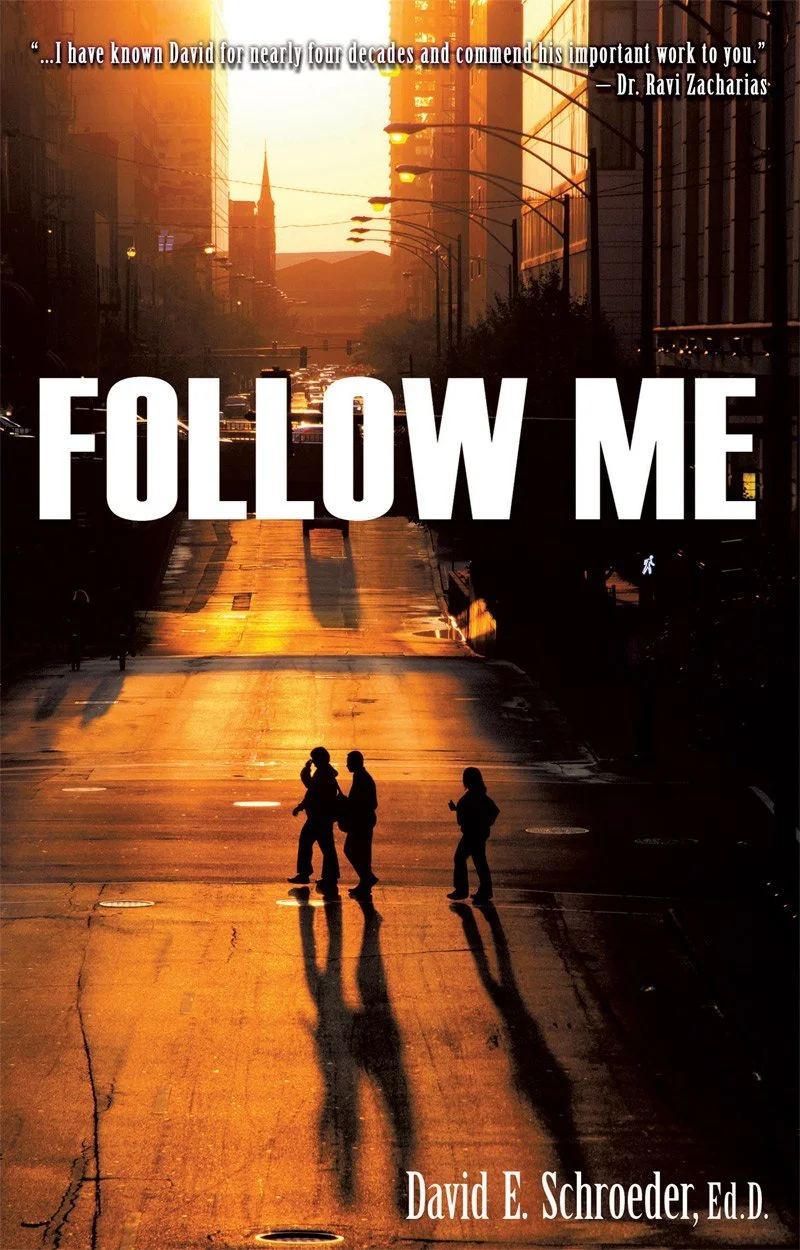
Follow Me
Betsy and I will be going back to Thailand for the eighth time in the last couple of years with an amazing ministry. We're helping about 700 fairly new Christians who will find themselves being pastors of village churches. There's a movement of God going on there like nothing else going on around the world. Every single week, hundreds of new believers are coming out of the darkness of other religions and animism. God has called us to that as well.
I would suggest to any leaders here on the show to be open to the bigger connection of our kingdom work. We all have our organizations. Hopefully, God is using them as parts of building His kingdom. He is always building us as well as building our organizations. He is building us so that we can participate more fully in the rich environment of kingdom-builders for Jesus. Those are some thoughts I wanted to tack on here.
He is always building us as well as building our organizations. He is building us so that we can participate more fully in the rich environment of kingdom-builders for Jesus.
Tell us about Pillar College. For those people who have kids, grandkids, or great-grandkids out there, tell us a little bit about the school and what offerings there are, like undergraduate, graduate, or terminal degrees.
A Legacy Of Education: Inside Pillar College
I would describe Pillar College as a new college built on an old foundation because it started as a Bible institute in 1908. They had been chartered in 2001 or 2002, very early on, to be a Bible college. I came in 2007, and it wasn't accredited yet. I left Nyack College and Alliance Seminary of over 3,000 students. For two years, I was in Chicago with the Mission Group, and then I was called to come here to this unaccredited Bible Institute of 120 students. It made no sense at all to do it, but we did. God called, and the call was clear.
We got accredited and so on. It was called Somerset Christian College. It was in the suburbs West of Newark, maybe 40 miles. A huge hurricane hit in 2011. We'd already started teaching courses in Downtown Newark. If you know New Jersey, if you missed the cities of New Jersey, you've missed New Jersey. It's almost one big city until you go South. We decided we wanted to be an urban school. We're moving back into the city, whereas many Christian groups move out of the city.
We serve an urban population, mostly minority people. We have five undergraduates, but the undergraduate majors we have are Biblical Studies, Psychology and Counseling, and Business and Leadership. Talk about vision. We pioneered adult education in New Jersey. In 2008, I started what we call LEAD, Life Enhancing Accelerated Degree. Now, there are 40 other schools in New Jersey competing with us for that market. It's an amazing program. We're opening our 111th and 112th cohorts of adult learners. They're in one of those three majors within those cohorts.
A few years ago, we pioneered this program called BLEND, which is a bad acronym. I'm good at bad acronyms. It is called the Bilingual Entry Degree. It's in Spanish. I tried to do that in New York, but New York wouldn't let me do it, but New Jersey does. A large part of our population is taking their associate's degree in Spanish while they're studying English as a second language. They can go on to a bachelor's degree and finish that.
We also have three graduate programs. We have a Master of Arts in Ministry Leadership. We probably will make that become Master of Divinity, but Master of Arts in Ministry Leadership fits well in the urban context. We have a Master of Arts in Counseling, which is a very strong program. We also have an MBA, Master of Business Administration, in Social Sector Management. It's got a distinctive taste to it, different from the typical MBA programs.
That's where we're at. We have a campus up in Patterson, New Jersey, the third-largest city. Newark is the largest, Jersey City is second, and Patterson is third. We are hoping and planning to try to open up in New York City. In fact, I have a meeting with about 70 pastors and business leaders in New York City because there is no longer an evangelical, Bible-believing, Christ-loving college or seminary in New York City. That's our plan. That's part of our vision.
We'll be praying for that. Thank you so much for what you're doing. Is that the best way for people to connect with you and get in touch with you?
They can either go through MasterWorks, or I'm quite glad to interact with them personally through my email. Probably the best way is DrSchroeder@MasterWorksInc.org. That would be the best way to connect with me by email.
I'm not sure why you ever thought you had retirement in your blood. Maybe it's something you thought you were supposed to do. What a blessing. I'm so excited and honored to be connecting with you at this stage of life, watching what you're doing, and coming alongside you. Thank you for sharing your memories of my father and for paying the price of leadership. Time is short. We need godly leaders modeling what it's going to take and encouraging and equipping others.
Thank you. This has been a privilege to be with you. I wish you and this show all the best. I'm so impressed with the work you're doing.
Thank you. For our fans out there, thank you so much. If you enjoyed what you read, please hit the like and share button for other readers who need some encouragement or some inspiration. If you do us the honor of a five-star review, that helps a lot, too. It gets our ratings up there. Remember what Charlie “Tremendous” Jones said, “’You'll be the same person five years from now, except for two things, which are the people you meet and the books you read.” You met the Tremendous Dr. David Schroeder. You can check out all of his tremendous books. Thank you again to our audience and everybody. Have a tremendous rest of your day.
Thanks. Bye.
Important Links
DrSchroeder@MasterWorksInc.org
About Dr. David Schroeder
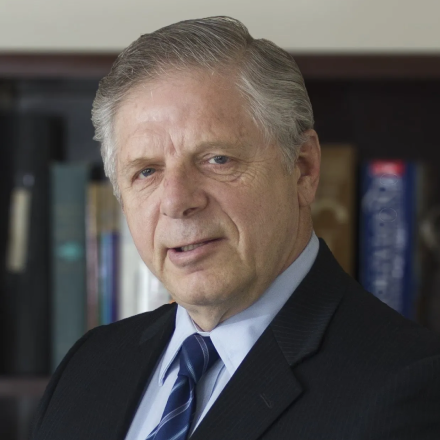
Dr. David E. Schroeder is president of Pillar College in Newark, New Jersey, and has served as president of two Christian colleges and two seminaries across nearly four decades in higher education. He is also the founder and president of MasterWorks, Inc., an international disciple-making ministry that equips believers on the front lines to complete the Great Commission through writing, publishing, teaching, and mentoring pastors and churches worldwide. A prolific author, he has written Come & Go, Follow Me, The Broken God, Frontiers of Faith, and The Lion, the Church, and the Warfare, with several titles also available in Spanish. Through the MasterWorks Academy, his teaching reaches students across Asia, Africa, Latin America, and the United States every week. He and his wife have been married for 59 years and have three children, eight grandchildren, and two great-grandchildren.