
Episode 204 - Leaders On Leadership With Brian Hennon

What happens when your leadership journey takes you into the most difficult season of all? Whether you are a business leader, a pastor, or someone navigating a major life transition, the path isn't always linear. Sometimes, the road leads to unexpected places—like the quiet, often misunderstood world of hospice care.
In this deep-dive conversation, we sit down with Brian Hennon, an accomplished author, leader, and end-of-life educator, to discuss what it truly means to pay the "price of leadership." From the weight of isolation to the necessity of finding a singular, trusted listener in the midst of burnout, Brian unpacks the lessons he learned across 22 years of pastoral ministry and his recent transition into hospice.
Today, we explore:
● The Price of Leadership: How to manage loneliness, abandonment, and the exhaustion of casting vision when you feel like a nomad.
● Redefining End-of-Life Care: Why hospice is about so much more than "dying"—it’s about dignity, comfort, and the 81-day window that can change everything for families.
● Stewardship Beyond the Pulpit: How to move past the fear of the unknown and make end-of-life decisions that honor your loved ones and your faith.
● Are you prepared for the final chapter? Brian’s book, Joy at the End of the Journey: Finding Joy and Honoring God with End-of-Life Decisions, offers a roadmap for those ready to trade fear for peace. Join us as we discuss why the most loving thing you can do for your family is to have a plan, and why every road, no matter how winding, leads somewhere meaningful.
Tune in to learn how to lead with hope—and why true joy is found in trusting the journey.
---
Watch the episode here
Listen to the podcast here
Leaders On Leadership With Brian Hennon
I'm excited to introduce you to our guest Brian Hennon. Brian, welcome.
Thank you. It's great to be here.
Thank you. I always like telling our readers how we connected. Brian reminded me that we went way back. We connected through a mutual friend, Jeff Payton. Jeff, if you're reading and you probably will because you're one of our tremendous fan. Thanks so much for connecting us. Not long ago, I had written a blog about called Seat 2A and I remember Brian responded to that and we reconnected.
He was nearby me in South Central Pennsylvania, and he has also gone through a tremendous transition in his life vocationally and written a book, so I want to talk about that but let me tell you about Brian. Brian, as I said, he's an author, a leader and an end-of-life educator. We're going to talk about his book then. He spent 22 years in pastoral leadership before transitioning into the healthcare field. Brian's passion is to help people face the end of their lives with joy and hope. Brian, I am so excited to have you here to talk about the price of leadership.
Thank you. I'm excited to be here.
You're welcome We'll get right into it. You talk about transitioning the lives. We're going to talk about Charles's speech. My father's speech, the price of leadership and I'll tell you he pounded leadership hard. It’s very pragmatic, but then he also showed us how to pass on to glory in the most spectacular way.
I know you're going to share a little bit about that. Brian, the first price that my father talked about in paying the price of leadership was loneliness. We've heard that, “Heavy is the head that wears the crown. It's lonely at the top.” For you and your leadership journey, either as a pastor or is an end-of-life educator. Can you unpack what paying the price of loneliness means for you?
The Burden Of Loneliness In Leadership
As a pastor, I spent about fifteen years as a youth pastor and another five years as a lead pastor. The lead pastor was probably the loneliest because it was a church planting situation. My wife and I did it together. It felt the Lord was calling us to do it. It was probably five of the most difficult years of my life overall. At the end of that little over five years, we were just extraordinarily burnt out but there were a lot of friends around us and a handful of good people around us. They encouraged us. They build us up.
They tried to help us as much as they could, but they couldn't understand the full weight of what we were going through. This is something we thought we were called to do. This is something we felt God wanted us to do, and we believe that. God made that clear in many different ways through several different people. It was a very lonely and a very difficult time. The transition out of full-time ministry back in 2016 or 2017 into end-of-life care, which I work in hospice.
I'm called a business development director, but it sounds so horrible. It sounds very strange with hospice. My role and my team's role is primarily education. There is such a lack of education about end of life, about hospice, and about the progression of disease. Physicians don't like to talk about it. Physicians don't like to give up. They would tell us all the time. There's a lot of leadership involved in that as well. I lead a team of about ten people who do this on a daily basis. They meet with families. They meet with physicians. They meet with personal care home administrators. You name it. They meet with them, and they do a lot of education. I help guide that team through that process.

Life Transitions: There is a major gap in education around end of life, hospice, and disease progression. Physicians often avoid these conversations and resist letting go.
You talked about loneliness as you said the full weight. A lot of times, when we are responding to the call, other people are outside and we're leaning into them as we're supposed to. I think of Jesus in the garden of Gethsemane. You sense it but then you fall asleep because you're not sweating blood. I've been through that. How did you get through that? I know you have the calling, but what advice would you give to our readers out there? It is tough even if you're in the calling and maybe you have a few. I like how you want from, we had a lot, to a few because we've all been there. Thank you for your transparency and honesty. What do you do? What would you recommend?
My recommendation is to find one person. It can be your advocate or your support. You can be dead honest with them and just speak your mind to them and your heart to them. I have a very good friend of mine. His name is Pastor Ben Maxie. He's a pastor of Living Water Community Church and then was one of my, I wouldn't say an advocate. He was my listener. We would go to lunch and he would just hear my heart and what I was struggling with. He didn't try to give me advice unless I asked for it. He just listened and was a very Godly man. When I needed advice, he gave it to me and it was always good.
I love that you said one, and I've always said that, “I'll go into any battle, but I have to have at least one.” I love that listener. That is beautiful because sometimes we think, “I don't want to hear it because then they're going to expect me to say something.” Jesus listened to broken hearts. I think of Mary. We just do that, too.
Thank you for sharing that I am going through a loneliness phase. You alluded to it with burnout, the weariness. My Charles will always say to me, “Tracey, whenever you are called a leader, there's going to be people that do more than what you've asked them to. The vast majority is going to do less and it's going to be tiring.” How did you get that season? Five years is a long time, Brian.
Navigating The Weariness Of Church Planting
If you have any church planters reading this, they can relate. Not only are you a pastor or a preacher, but you're a real estate agent, a facilities director. In the five years, we were a church plant. We were called The Refuge Community Church. We were kicked out of 5-7 buildings. Every time we would find a new building, we would get sold. I would have to find a new building that could house 50 to 100 people.
Another building we went to, and I won't mention the township. They told us we weren't allowed to be in the building because it wasn't zoned right. Multiple things happen. Again, not only was I pastor, but there were all kinds of things that I was trying to do all while navigating. The people we had were good people. The majority of them loved Jesus. They loved the church, but helping people understand the vision and being able to come behind that vision. Maybe that was lacking in my leadership to be able to do that, but it's a very difficult task to stay on mission. It's very tiring and weary.
Vision is the fourth one, so we're going to circle back to that because it is tiring. I love that you owned it and said, it could be a failure. I don't consider myself a visionary. I'm a doer. I always struggle with this and I'm like, “I know that people probably aren't into it because I'm not doing this correctly or clear enough,” but thank God, we got the Holy Spirit.
Amen.
Redefining Identity Outside Of A Vocational Title
I’m like, “Nobody would come alongside us.” I love that you said that you were physically weary because you're a refugee. You're the nomad going from place to place. I'm sure there are other people reading and maybe it's their home or their job where they feel like they just can't land and feel stable and secure. I hope that your words land with them and they realize you're not alone in going through this. This is the season. You will land at your home. I promise you that. It always works out in the end.
The third price he talked about is abandonment. It's not like fear of abandonment or giving up a pet to a pet shelter, but it was going all in. I can't remember my father telling me that he did more in a day to contribute to him being a failure than a success. For those of you that know my father, you’re like, “What?” He was like, “If you break down every minute of the day into ledger, credits and debits. I focus on what I like and what I want to do and not what I ought and should do.” That laser focused on abandonment. How do you do that in leadership? When you're tired or when you have people that don't feel the full weight and you're running from place to place.
In my role, to me, it's real simple. I'm a business development director but our goal is to take care of people. That's our primary goal. Within that structure are Medicare regulations and all kinds of things that we have to follow, but the primary goal is to take care of people. That includes the people that report to me. The people who are under me. I have to be able to help them as they struggle with their own personality, conflicts and things like that. I have to understand them and understand who they are. That's very tiresome, too.
Sometimes, as a leader, you want to say something and people do it. That's it. You don't have to explain why. You don't have to motivate them. You don't have to cast the vision for that. You just want to do it but that's not human nature. I'm not that way. As you said, I want to spend a day doing the things that I'm good at. Not the things that I'm not good at. Those things that I'm not necessarily gifted at doing, they wear on you. You become tired and you feel that the weight of that abandonment is what you're saying, when you're outside of your comfort zone, but that's where you grow.
This isn't a slight against the church, but I've grown more as a leader outside of the church than I did inside of the church. In the secular arena, I've had some wonderful leaders. Some very amazing leaders who aren't believers, but they spoke truth into my life. I am a firm believer that truth is truth. It's God's truth and Jesus is the way in the truth.
If somebody speaks truth into your life, you take it. I worked under a secular leader who didn't have my best interest at heart as well. The ones who did, there's a thing on LinkedIn I see once in a while. It says, “You always remember that one leader who gave you a shot,” and that is the truth in my life. I don't know if I answered the question or not.
When truth is spoken into your life, you don’t resist it—you receive it.
You absolutely did and you need to find that voice that's going to help you. That clarity call. That champion and you said it. There's going to be a lot of other things coming in from different angles, mudding the waters but as you said, you took it all in. You broke it down and unpacked it and said, “This person is speaking the truth and this person is not. I've got to follow based on that.” As leaders, do we get input? A lot of it is solicited.
Some of it anonymous.
I don't even know you kind of thing but some of it I don't like. It's one of those things where you have to be abandoned to searching for the truth too to stay on point. I love it. Lastly, again vision. I grew up watching these people like Ken Blanchard and Zig Ziglar. I'm like, “What do they get? What did they take his kids?” My dad was like, “Vision is just seeing what needs to be done and doing it.” He was always so pragmatic about stuff and I'm like, “See what needs to be done and do it.” Talk to us about the vision in the mission. How do we stay on? Everybody struggles with it.
As believers, our mission is real simple. It's to love God and to love people. That's our mission and we complicate that so much in the church world and outside of the church world. We conflate mission with vision with personal opinion. All of those things, and that mission is simple. What are the two greatest commandments? Love God with all our heart soul, broth strength and mind and to love our neighbor as ourself.
I love when scripture says, “In that, you've fulfilled the love or you fulfill what God wants us to do by doing those.” Now, there's all kinds of ways we can do that. I used to think as a young pastor that I can only do this as a pastor. I can only do these things in full-time ministry. Honestly, transitioning out of 27 years as a pastor, it was a very difficult time because I'd always been Pastor Brian. Always. I had never been anything, but Pastor Brian, at least for pretty much my entire adult life. Now, I wasn't Pastor Brian.
I had to figure out my identity outside of that. My identity is Jesus. My identity is what he's called me to do. That's to love him and to love people. I can do that anywhere. I know there are pastors out there who fear abandoning their call but the ultimate call that we have as believers is to follow Jesus wherever that takes us. I don't know if I answered the question again.
I love that you talked about your identity was in your title. Anybody that's left, it’s like when we leave the military. I'm like, “I don't have a rank in front of my name anymore. It feels weird.”
You’re high up there, too. You're a Major I think, aren't you?
Yes. That's mid-level but thank you saying that. My husband’s a Marine so he can still wolf me.
That's true. Does he eat crayons, though?
He does. Sam's misguided children. He's a crayon eater. I love that you talked about the ultimate. The one thing is to love it and wherever. Charles would always say that, too. We're all in full-time ministry. Even the lay person. You're out there. When you're a vessel for Christ, you can be a vessel anywhere and even when you're not buying the pulpit. Everybody's always watching you, so I greatly appreciate that. I want to talk about that. How did you get the calling from pastoral ministry to what you're doing right now in healthcare?
I have a working title for another book. It's called Every Road Leads Somewhere. My grandfather, when he was in his late 80s, was struggling with some dementia. I didn't know it at the time because I didn't see him often. I was in Pittsburgh with them and my grandmother sent us to the store. It took us what should have been about 15 minutes, it was about 45 to get home because he couldn't remember where to go. I said, “Pop, are we lost?” He said, “You're never lost. Every road leads somewhere.”
When you asked me what was the call out of full-time ministry, it was more out of necessity. My goal, when we shut our church plant down, was to be a pastor again within a year. Since I was burning out, I was looking for something temporary. Something that is just a hold over a job. Part of my resume as I was six years in the Army National Guard as a public affairs specialist. I went to a defense information school. I was a journalist and a writer. I thought I could fall back on that. That, plus, my Bible education.
At Lancaster Bible College, I thought I'd be a shoo-in for a new job. Eighty-seven resumes and 87 rejections later, I was at a local warehouse applying to be a warehouse picker at 46 years old. Which is not beneath me, but it's not something I wanted to do. It was not necessarily something I felt I was physically ready to do either to pick packages all day. A friend of mine who was a bi-vocational pastor named Tim. Tim was pastoring a church called Resonate Church in Carlisle and he called me up.
This is how God works. God is so amazing because he connects us with people. It's a connection but what was the purpose of it? I was connected with Tim's wife, Mary. She was the managing director of New Hope Ministries and we've volunteered there as a church and as a church family. When I left the ministry, she talked to her husband and said, “This guy needs a job.” He worked in a particular hospice agency as an end-of-life educator.
His goal was to educate people who were approaching end of life and to talk to them about hospice. He called me one day and said, “I hear you need a job.” I said, “I absolutely do.” He said, “Let's meet for dinner.” We met for dinner and he explained the job to me. I didn't know what he was talking about. I didn't know anything about health care. I didn't know anybody about hospice.
Finding A New Calling In End-Of-Life Care
Were your parents still around or you hadn't seen any?
Yes. I had no experience in hospice. I needed a job and health insurance for my family, so I’m like, “Sure. I'll do it,” after almost 100 resumes getting rejected. I did it. I was in orientation with Tim in our office in Mechanicsburg, and we got a call from a family. The gentleman had liver cancer. I read it at the end of the day, it was about 5:00, he had liver cancer. His wife called. He had been on home health care which is different from hospice. Home health is more curative in nature. Hospice is more comfort-focused.
Anyway, we got the call from one of our nurses. She said, “This family needs your help,” so Tim and I drove out to their house. It was 5:30 or 5:45 by the time we got there. The gentleman was sleeping on a couch. He couldn't sleep in a bed. He had to be propped up. He was in pain. His wife was sleeping in a chair to keep him from falling out of the couch. Not even a reclining chair. We walked in and we started talking about hospice and what all we could provide. The wife looked at us and said, “Why has no one told me about this? No one has told me that I can get this help and he can be comfortable.”
After Tim had explained everything to her, “In hospice, there's three legs of the stool. There's people, medication and equipment.” I know you've gone through this with your family. Those are the three legged stool and it's all covered by Medicare. When we explained that to her, she started crying. She was like, “I don't understand why my doctor didn't tell me this. The hospital didn't tell me this.” the reality is, it's not a comfortable topic. Nobody wants to talk about it. Anyway, that was where I started to feel like this was my new calling. This is what I was meant to do. In my book, which you read, there's a couple stories in there that confirmed that in my heart.
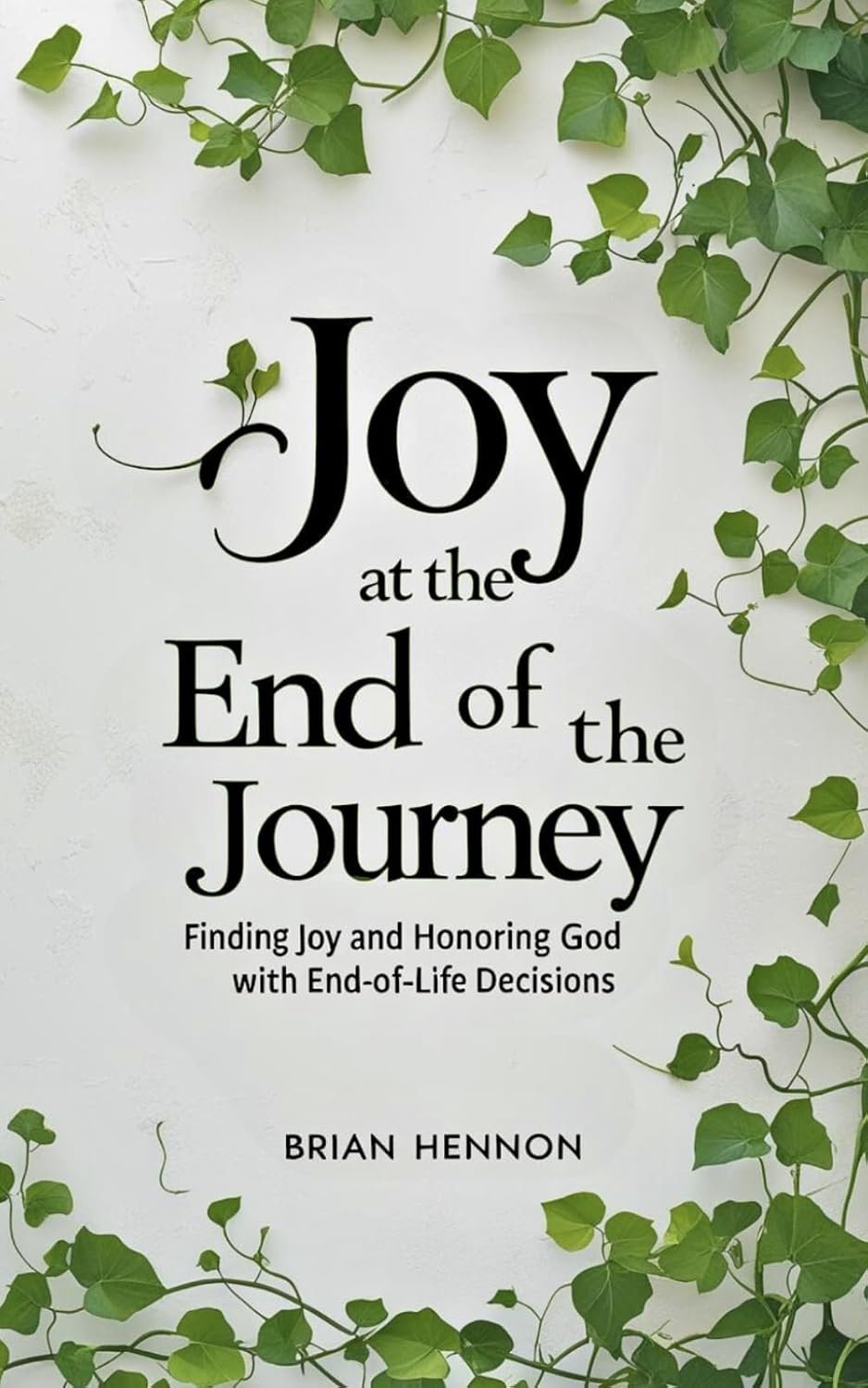
Joy at the End of the Journey: Finding Joy and Honoring God with End-of-Life Decisions
Let's talk about the book. The title of the book is called Joy at the End of the Journey. A lot of times, I work with people that are unlike their third or fourth career. They think that, “This is the real end of the journey,” and your timeline is Finding Joy and Honoring God with End-of-Life Decisions. Folks, we connected and he sent me an email. He sent me this link. Thank you for the book. I immediately read it. I woke up at 5:45 that morning because you're like, “Are you okay?” It’s because I sent you an email and a review like, “Tracey, might have said, ‘I got to call hospice now.’” I read it and I put a review on it.
Folks, she got to get it. I have had a lot of things happen in my life, but one of the things I am most grateful for is two of them. It was that I was there with my parents, both of them in hospice care when they passed to glory. You talk about that three-legged stool. It is everything we do now from birth on. It’s preparing for dying well and getting these in order. Brian, can you tell us a little bit about the book? In particular, I want you to share the part about the 81 days.
The genesis of the book where it all came from and share this story in there was I was in a room with a family and their pastor came in. Their mom had not left any wishes. She didn't tell them what she wanted, which to your readers or to those who are watching, please make sure you have a plan. Make sure you have a living will. There's all kinds of tools out there. At the end, Tracey will share some contact information. I’d love to talk to you about how to make a plan.
To me, that's the most loving thing to do for my family so that they know the decisions they need to make. The reason for the book was, I was in this room and their pastor came in. He was a young guy. Probably in his 30s or maybe late 20s. I had been there. I was in his shoes at one point. I’m in my mid-50s, but when one family member asked him for advice, “What should we do?” He said, “I don't know. Let's pray.” I'm all for praying and I'm all for asking God for wisdom but, in the book, I talk about how we know that God gives us wisdom in three different ways. Through the word, experience and through other people.
He didn't draw on any of that, but I don't fault him for that. I went to Lancaster Bible College. It was a wonderful school, but we didn't have any classes on this. We had no classes on how to Shepherd people through the end of life. If you talk to most pastors, most of them have it. One gentleman I know, he’s a pastor in the free Lutheran denomination. They did have classes on this to their credit, but most of them don't. They teach us how to Shepherd through all kinds of things like marriages and how to do funerals.
That's where the book came from. There are a few other resources out there, but they're very long and very technical. They feel very drawn out to me. I always believed brevity is better. I wanted to be short and make it easy to read for people, but draw on scripture, too. The reality is, we're all going to die. Every one of us. Whether we talk about it or not, it's going to happen unless Jesus comes back. Which I hope he does.
To your question about the 81 days. It's amazing to me. One thing I've learned and one of the things we try to educate people a lot is, I use President Jimmy Carter in the book. We talk about him in the book. Jimmy Carter was in hospice for almost two years. He came on hospice in February 2023 and was discharged or passed away in December of 2024. It's been almost two years in hospice. Most people think hospice is like, “I'm going to die tomorrow.” It's an end-of-life benefit. You have to have a diagnosis of six months or less to live. There isn't one doctor or one human being who can tell me how long I have left. I might have six months. I don't know.
The Value Of Comfort-Focused Care And The 81-Day Window
One of the first objections we always get is, “I'm not dying.” I always tell people, “We all are. We’re all dying.” Here's the reality. A lot of the people I interact with, they're in and out of the hospital 2, 3, 4 or 5 times and they continue to decline in spite of that. Is the hospital helping? Is medication helping? The answer is, it's not. There are studies that show. They're peer-reviewed studies that those who choose a comfort focused approach to life, they're sick and in and out of the hospital.
They decide they don't want aggressive treatment anymore. They don't want to go to the hospital anymore. They don't want help with medication anymore. They decide they want to be comfortable. Studies show that they can live up to 81 days longer with heart failure with comfort focus care rather than curative focused care.
It's an amazing statistic to me, because you think about what can happen in 81 days. The amount of reconciliation, the amount of family. You can spend time with your family. Think about President Carter again. In those two years, he got to spend with his family. He got to spend time with his wife Rosalynn when she passed away. Had he not chosen that, I don't know what would have happened, but he may have been in the hospital.
He may have missed out on a lot of those. In the book, we talk about stewarding our time. There's going to come a point where I have to decide what's the best use of my time. Is it going to the hospital or going to physicians or going to a specialist and getting treatment or staying home and being with my family? To your point, the question about the 81 days.
That was quite profound for me because again, I'm in the thing. My parents are in glory, but everybody's going through this. My parents are gone, but we're losing older siblings and then we're going to be next up. We’re the next generation up headed, so it was impactful to me. As a believer, all the Christians out there, and if you're not and you're thinking, “Tracey, I don't know if I can be as certain as you.” Yes, you can. We can talk more about that but I don't fear death, but the dying.
Can I just go to sleep and wake up and go, “Please, God. Let me be one of those people.” It's one of those things. You articulated that in the book, but all your book is about end-of-life decisions. You make them now. We make decisions our whole life and then I heard people say, “I'm not going to be around. Somebody else will help to deal with it.” I'm like, “Seriously?” You make the decision now.
Otherwise, the state will. You talk about stewardship at the end. The bottom line is, too. We're staying at the beam and seat with everything that we've accumulated on this Earth and what have we done with it? If in the end we just say, “It goes wherever the wind blows. Scatter my wallet and whatever works.”
That's good stewardship. That's going to burn up and we're going to have to answer for that. End of life decisions are some of the most important. What did Charles say? The three decisions. Who you're going to live your life with, what are you going to live your life doing and who are you going to live your life for? I would end with a fourth decision. That'll be our next book, Brian, that you can write. I know a good publisher. Where do we go with the end of our life decisions?
Challenging The Misconception Of Conflating Medical Treatment With Faith
You’re right. There was a story I shared in the book. I met a woman who had lung cancer. When I went into her hospital room, I was asked to come in by the physician. Her Bible study group had just been in and she told them that she was done. She wanted to go home. She didn't want treatment. They told her she lacked faith.
She asked me what I thought about that. I said, “Help me understand this. You lack faith by saying no more treatment. Treatment can be good. God blessed us with a wonderful medical establishment, wonderful doctors and nurses, but it has its limits.” She was choosing to say no more limited treatment. No more aggressive thinking and I'm going to put my future and my healing fully in the hands of God. I said, “You tell me who has more faith.” She said, “You're saying I have more faith by doing this?” I said, “You do.”
She goes, “Can I tell my friends that?” I said, “You could tell anybody you want.” That's the reality. We equate and we conflate medical treatment with faith in God. The two are completely different. It said in church and I used to say it as a pastor. “Many times, we confuse the gift with the giver.” Medical treatment is a gift, but it's not the giver. God is ultimately the one who heals us. As you said, I'm not afraid of death. I'm a little hesitant about the dying process.
Medical treatment is a gift, but not the giver. God is ultimately the one who heals.
I love how you said that because we're all getting older. I'm a little older than you. You helped me articulate that. If my thing is to die well, I'm going to take care of my finances. I'm going to make sure my wills are updated. I’m going to make sure my wish that I already know now is to pass in my home. I have set up things to make sure that I have the resources and the decision making. That is how it's going to happen.
If it happens and when it happens, I feel like I have exited. The other thing is, you know as a pastor and as a leadership person that teaches people to get stuff done is that I pass and have all my crap in the wind. People would be like, “Tracey, should have talked a good line but if you looked underneath her life.” That's crazy. I hate to say that but I'm like, “I got to get stuff.” My ship squared away in all things.
At the end of the day, you're going to be in glory. It's all game for you.
Still, I don't want them to meet my friends in heaven and then they go, “Thanks for letting me clean out your 50 pairs of cowboy boots.” Although, they'll probably like that. I’m just saying. I love it, Brian. I love how you talked about hospice. You can go in and out of hospice. People think you got to be like a week or less in the hospital. You can go out and go visit and do things. You can come into palliative care and back and forth.
My father Charles, he lived with cancer. He got diagnosed at 70 and died one week shy of 81. He went through a lot of things but towards the end, he's like, “Everybody stop praying for healing. I'm not doing any more treatment.” I remember he told me and some people were upset. I said, “We have to honor that. He's ready to go home.”It’s his choice. We always talk about my body, my choice.
I'm going to say something else. You brought this up, assisted suicide. This is not assisted suicide. We're not even going to go into that when I say my body, my choice. I love that you said, this is biblically letting God make the decision. You have a say in that but I want our readers to know, this does not go into that nor should it.
Hospice And End-Of-Life Care Reality
There's two things and ways I look at that. One, assisted suicide is artificially hastening death. There's also artificially lengthening death or lengthening life. In reality, a lot of the treatment that a lot of people get is artificial. It's keeping them alive and in a sense. God knows when I'm going to go but the repeated hospitalizations and the repeated surgery is there. There’s a well-known pastor who won't say, but he just passed away. I read an article about him. In his late 80s, in his last year of life, he had over four surgeries.
If you think about it, his last year of life was spent in the hospital or in rehab instead of being at home. I'm not judging him, but it was spent trying to lengthen his life. I don't want to spend the last year of my life doing that. Back to hospice. You can come in and out of hospice. It's not ideal, but you will have patience when you come out of the hospital. Again, this is a hard decision. It's a difficult discussion. They may not be quite ready for hospice but they're still that fear in their heart.
They come out and they start getting symptomatic or they get short of breath. They call an ambulance because that's their natural inclination. That's what we're told to do. They get admitted to the hospital. They have to discharge hospice once they go to the hospital because hospice is paid for the same way the hospital is. It's paid for by Medicare part A for Medicare patients.
Medicare will not pay for both at the same time. They have to discharge hospice or revoke it. When they come back out of the hospital, they can start hospice again. The caveat to that is, if it happens too many times, then things get flagged then this patient isn't necessarily ready for hospice if they keep going back and forth to the hospital. That's when we have that conversation with the family like, “Maybe you're not quite ready yet.”
You would talk to them because as you said with the guy with liver failure, even before. Did you set him up for hospice or just home health care?
We set him up for hospice. We got him set up for hospice. He passed away pretty quickly.
It's one of those things that knowledge is power. As I was reading that, it's very strange because my experience with hospice and everybody I know that's passed. The longest I ever saw anybody in hospice was a month. In my mind, I'm like, “A month or maybe a little longer.” Not long ago, I was talking to a guy. I took an Uber. I flew out to Asheville. The guy at the Uber was in hospice.
The storm happening in Asheville, that horrific storm a few years ago, all his oxygen and stuff was knocked out. His body decided, “I'm either going to expire or I'm going to get better.” He got better. He was driving my Uber. My neighbor was telling me her sister was in hospice and I'm like, “How's your sister?” They're like, “She's better. She's stopped all this medicine stuff.” Again, I am not anti-medicine but it's weird now that a lot of people are saying, as you said, “Enough is enough.”
On one hand, I love medicine but I also love the fact that God made this unbelievable body that has so many redundant systems and healing powers. That sometimes, in both of these cases, it was like when they just stepped away from all the stuff that was being done. The ship had a chance to write itself. I'm not saying that's always going to happen because these are only two stories that I've heard in the past. When I read you saying that, I'm like, “That's good to know because I'm sure there are other people who have heard more instances of it.”
You think about someone who's got a life limiting illness. Whether it's heart failure, cancer or dementia. Especially dementia patients. Those repeated trips back and forth to the hospital will cause, many times, hastens the decline because of this stress. You think about the stress of going to the hospital. Especially for someone with dementia who's already confused and now you're putting them in the hospital. What we see families more often than not say is, “Every time mom or dad goes to the hospital, it gets worse.” It's not the hospital’s fault. It's the environment's fault.
I'm still glad you're bringing that up because I forget I'm reading a book on Alzheimer's research and all that stuff. Not just that. There's fraud and abuse everywhere. Anything men touch is going to be corrupt. Let's just say that, but this book is particularly about that. You just think about that. One of the things is, when you pull them out of their element, it's incredibly disorienting. I want to call that to the people because I'm sure everybody reading this has at least somebody they know that is going through some mild cognitive impairment, Alzheimer's or dementia. Knowing that you think you're trying to help them, but that is incredibly unsettling if you've ever worked with anybody with it.
They don't get it and they get home and they're like, “What was that about?” I'm glad you brought that up because that's a big deal. I hope that gives somebody some insight if they're struggling with it. If you're struggling with it, you need to reach out to Brian. Brian, tell people the best way to get a hold of you.
Hope, Faith, And Redefining Healing
My email is Brian@HopefulHope.org. That's my website if you'd like. It's funny that the name for Hopeful Hope came about when I was a young pastor. I was 24 or 25. There was a woman in our church, 30 some years old, who was dying of breast cancer. The pastor was a very conservative, Bob Jones kind of guy. We went to pray for her and I prayed very hesitantly like, “God, if you want to heal her. God, if it's your will, heal her.” He prayed heaven down. I'll never forget it. I thought Jesus was going to show up in the room right then.
When we got in the car, I said, “Aren't you afraid of giving false hope?” He said, “There is no such thing. Hope is always hopeful.” That's where I got that name, Hopeful Hope. It's always hopeful when Christ is involved, especially. Hope is always hopeful, right? I'm a Pittsburgh Pirate fan. At the beginning of every season, I'm hopeful but it always gets dashed by mid-April or mid-May.
Hope is always hopeful.
The hope we have in Christ is so different. It's a certain hope. It's a sure hope. It's not, “I hope it's going to happen or I guess it's going to happen.” It's, “This is going to happen,” based on what God has already done and what he did on Calvary with the cross. He's already fulfilled his promise. He already made good on his promise. We can trust him to make good on the rest. I won’t preach.
I hope everybody for the whole rest of it because that was the best part. I know you had said that, and I forgot about you saying it. People ask me to pray and I'm like, “When do I go? What if it doesn't happen?” It's like, “Tracey, you're not Nostradamus. Stop it.” I thank you for that. It's already done. This death is just temporary. We're all going to go through it, but thank you for that. Brian, we talked a lot about leadership. Any other thoughts that we did not get to cover that you'd like to leave with our fans?
First off, something that popped into my head while we were talking. If any of your readers are pastors or their ministry and they're struggling. Not that I want everybody to drop out of ministry and stop being a pastor, but if you're in a place where you're burning out. I want you to know that there is hope outside of full-time ministry. There is. I'm in year eleven of my temporary job. Everything's temporary ultimately, but if you're a pastor and struggling. You're thinking, “I'm a failure.” You're not.
That's the first thing that popped into my head. If you've done what God's called you to do, and you've done it perfectly because we're imperfect people. Trust that God knows. Every road leads somewhere. God's got a plan for you. To those who are reading who are struggling with a loved one or with her own health. It's the final chapter in my book where the principal gained. “To live is Christ. To die is gain.” There is nothing in heaven, nothing in the next life that won't be gain for me.
There's not there's not going to be, “I wish this would have happened. I wish I would have done more of this.” It's gain. The other flip side of that, and I want to keep laboring this. For those who are afraid to go, because you're going to leave loved ones behind. We have to trust that it's going to be gain for them, too. That God loves them more than I do that. God cares for them more than I do. Even though I want to see my daughter get married or I want to see my son get married and I want to see my grandchildren.
If he chooses to take me, it's going to be a gain for them. It's going to be hard, but it's still going to be gain for them. Ultimately, what I hope people get from this is, whether in leadership or not, we've got to trust God. He knows what's best. He showed us he knows what's best. A philosopher said, “What's the greatest truth you've ever heard in your life?” He said, “Jesus loves me. This I know before the Bible tells me so.”’ We've got to trust in that and there's no reason not to.
I love that you said it's not just for us but for the ones left behind because he’s just God and he's a loving God. I thought the other ending was good but now I resent that. Brian, I can't wait to connect. We're neighbors. We'll talk about your next book because I loved it. Everyone does leave someone. Thank you for pouring into so many and sharing your wisdom. Brian, I can't thank you enough. Again, folks, this is Brian Hennon of HopefulHope.org and the name of his book is Joy at the End of the Journey: Finding Joy and Honoring God with End-of-Life Decisions.
It's a quick read. You can pick it up on Kindle and get a copy. Read it. I don't care if you're 50 or 40, because the more now, then you got that taken care of because we don't know. We don't know when the Lord's going to call us home or call you both home together. To our tremendous fans out there, we thank you so much for being a part of this. We hope you were inspired, encouraged, affirmed and educated.
If you like what you read, please hit the like button. If you would do us the honor of a review, that helps everybody know what they're reading and how it impacted you. That is the highest compliment you can give us. Again, Brian, Charles always said, “You'll be the same person five years from now, except for two things, the people you meet and the books you read.” You'll have just met the tremendous, Brian Hennon. I hope you read as I did Joy at the End of the Journey. I hope you grab a copy of thePrice of Leadership, too. Thank you, everybody so much. Have a tremendous day.
Important Links
About Brian Hennon
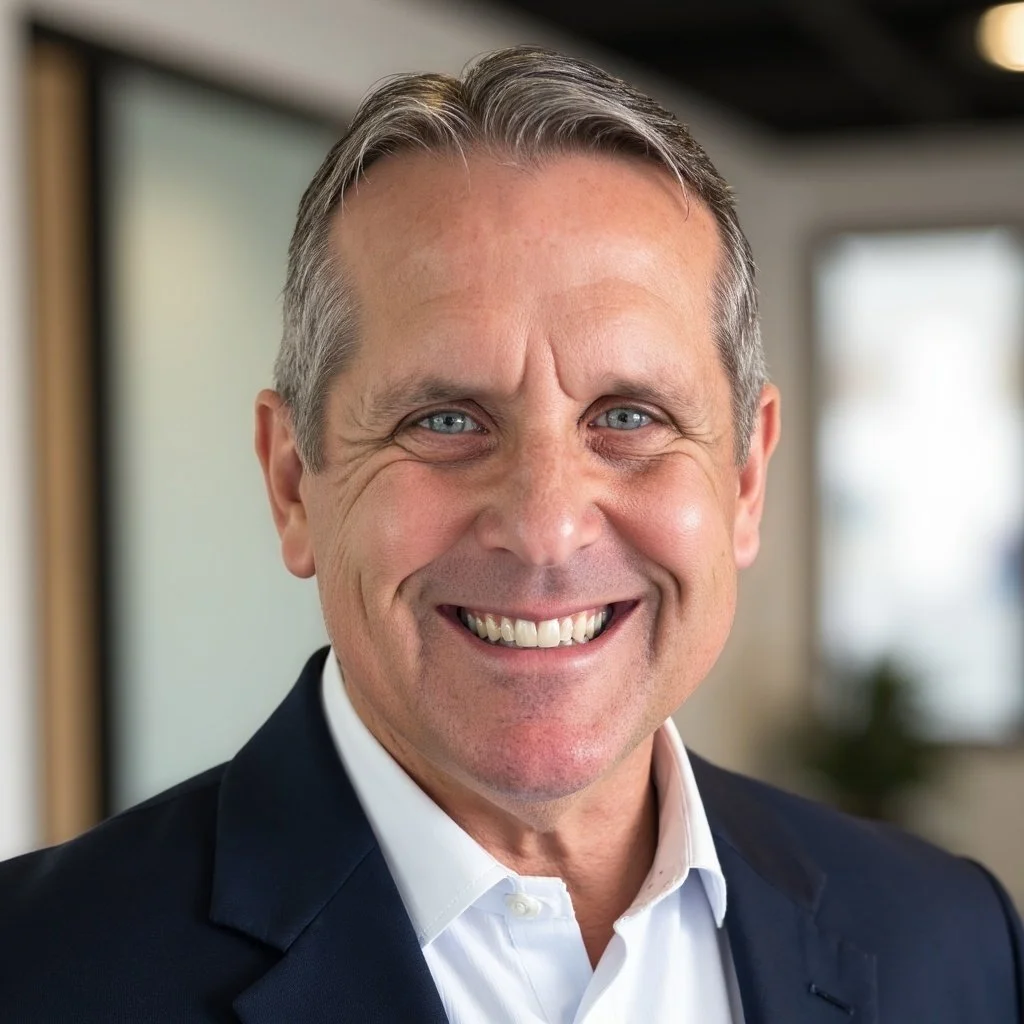
Brian Hennon is an author, leader, and end-of-life educator who spent over two decades in pastoral ministry before transitioning into healthcare. Now working in hospice, Brian saw firsthand how often Christians are unequipped to make sound, biblical decisions about end-of-life matters.
That conviction led to his first book, Joy at the End of the Journey: Finding Joy and Honoring God with End-of-Life Decisions, which pairs real-life experience with biblical wisdom to help readers navigate life's hardest moments. Brian's passion is to help people face the end of their lives with joy and hope.