
Episode 208 - Leaders On Leadership With Keith Cole

Navigating the heavy price of high-stakes leadership often leads to quiet exhaustion, chronic pressure, and severe personal burnout. In this powerful conversation, host Dr. Tracey Jones sits down with Marine Corps Vietnam combat veteran and retired CPA Keith Cole to address Overcoming Burnout through faith, surrender, and daily spiritual renewal. Keith Cole shares his deeply personal journey through early loss, military service, and the crushing weight of professional self-reliance. You'll learn how hidden trauma silently impacts your decision-making and why true strength requires laying down anger to ask for help. Discover practical daily steps to transition away from isolation so you can experience genuine peace at the helm of your organization. Connect with Keith Cole's transformative work and resources at RecoveryByFaith.com.
---
Watch the episode here
Listen to the podcast here
Leaders On Leadership With Keith Cole
Everyone, I am very excited to introduce you to Keith Cole.
---
Keith, welcome.
Thank you very much. It's such a wonderful pleasure for me to be here, and I'm very grateful. Thank you, Tracey.
You're welcome. For our audience, let me tell you a little bit about Keith, and then I'm going to let him share how we actually connected because it's another tremendous story, as it always is. Keith A. Cole is a Marine Corps Vietnam combat veteran, a retired CPA, an author, and a speaker who helps people understand the hidden costs of trauma, chronic pressure, and self-reliance. After experiencing severe burnout himself, Keith now shares a message of faith, surrender, and practical daily renewal to help people who appear strong on the outside but are quietly exhausted within discover hope, healing, and renewed purpose. Keith, I cannot wait to hear what you have to say. I know you're going to bless our listeners.
Thank you so very much, Tracey.
I love to tell people how we connected, because people are like, “How did you cross paths with this tremendous gentleman?” I'll tell you, as you know, with the show, and we're always open to having wonderful people on here, I get a lot of pitches from companies, PR companies, a lot, like several a day. I'm like, “I have to know there's a value congruence about it before I want somebody on the show.”
I got an email from Keith, and he just cold reached out to me. Keith, I'll let you tell the story, but that's how we connected. By the grace of God, I saw this email, and I'm like, “This one I need to read because it was from the individual that wanted to be on the podcast.” Keith, do you want to tell them about how you made the connection and the epiphany of how we were connected?
True alignment happens when you lead with shared values instead of transactional pitches. What's driving your outreach today?
Overcoming Burnout Through Providential Connections
Yes. I went through searching all types of outlets and types of things to find a show where I think my story would fit. When I came upon Tracey Jones, and then I looked you up on the internet, and I said, “Oh no.”
Oh no, in a good way.
Definitely. I said, “I do not believe this.” When I got out of the Marine Corps, one of my jobs. I had several right away. The particular one was a finance company where I checked floor plans. To do that, I was driving all over the place. I had a cassette player that I plugged into my cigarette lighter in my car. I listened to your father's tapes until they literally wore out. The machine ate the tapes. I said, “I cannot believe this.” I said, “I have to write to Tracey to see if I can get on her show.”
That was it. The eight tracks, they used to eat our tapes. You just brought back that memory, and I'm like, “It was worse than taking a pencil and trying to screw it back in.” It’s just so exciting that he actually was familiar with this, and then to have that providential moment about how that connection goes forward. Immediately I called Keith and talked to him and thought, “He's definitely somebody that we need to share.” Again, brother, thank you for your service. We're so thankful for people like you.
Just had our 250th birthday as a country, and it's people like you that make it all possible. Keith, without any further ado, we are going to get right into the price of leadership. This was one of the speeches my father gave. We've had this transcribed and put into a booklet. It's the premise for this show. It's all about if you are going to be a leader, a true leader and not a leader in name only, a lino or a LARPing leader, that you're going to have to be paying your dues.
Keith, the first thing he talks about is loneliness. I'm very interested to hear how you unpack that, especially with your work in trauma, burnout, and exhaustion. We've all heard that it's lonely at the top. Every leader that's tuning in has experienced a season of this. Can you unpack loneliness for us as a leader? Maybe if someone's going through a season, a resource that you may offer to them.
Carrying The Heavy Dues Of Early Leadership
Thanks for asking me that. I had plenty of opportunities in my lifetime to experience loneliness and different types of loneliness. The true loneliness in leadership. The first time was just becoming a guardian of my younger brother and sister when I was just 23 years old. There was a tremendous sense of loneliness in that. There was a sense of leadership being a 23-year-old guardian for two young teenagers.
I do not mean to interrupt you, but I know that story, and that's something that people need to hear from you. Can you tell us how you wound up at 23 years old being a guardian for your two younger siblings?

Overcoming Burnout: Leadership often calls us to step up long before we feel ready. True strength starts when you embrace the responsibility.
I had been home from Vietnam for a while, but I was still in the Marine Corps and had gotten out of the hospital. I was on what was called I&I duty, which is an inspector and instructor. Our main reason for existence was to train reserves. We didn't have a base, but we were in one of the cities with a compound. The reserves would come in one weekend a month, and we'd take them to San Diego for two weeks in the summer for training. The main thing, what we did, I consider much more important, of course, was notifying the next of kin when a Marine was killed or wounded in action.
We served as the honor guard for the fallen Marine. Truly, that was honorable duty, but it definitely took its toll as well. In my last year in the Marine Corps, when I was there, I got a phone call. A phone call came from my older brother. He said that my mother was not expected to live through the night. I knew that she had been sick. She had cancer. She had my younger brother and sister, of course, who were still at home.
She had asked me if she passed away before my siblings graduated from high school, if I'd be their guardian. Of course, I'll do that. Not knowing what I was in for. After her funeral, I went back to duty. I requested from Marine Corps headquarters to be discharged to be the guardian of my younger brother and sister. They approved it. I was discharged from the Marines, and I became the guardian of two young teenagers.
Your father had already passed, correct?
My dad died when I was in high school.
This is another special type of loneliness with being basically an orphan as a young person, and it's unsettling enough when it happens to you in your 40s, 50s, 60s, 70s, but to be that young and happy.
That was a very difficult time in my life when that happened.
I just wanted to set that up for the audience that was well acquainted with loneliness from an early age. Keith, please go on with how you want to thread that into your seasons of loneliness.
The buck stops with you, but that doesn't mean you have to carry the mental burden all alone. Don't let self-reliance burn you out.
From when my dad died, I was a senior. I had just started, and it was the first half of the senior year. At that particular time, I had every intention of becoming a Methodist minister. At that time, I totally lost it. I became very rebellious when my dad died. He was a railroader, a very strong man. It couldn't have been his fault. Of course, I blamed God. I became very selfish with my grief and mostly anger, more than probably as much as grief. Instead of going into the ministry, I went into the Marine Corps. There was a sense of loneliness in that as well.
Of grieving while I'm still at home. I totally ignored anybody else that was around me. I had no concern for my younger brother and sister's loss of their dad or my mother for the loss of her husband. It was totally selfish. That was a loneliness that I helped build as well. The real loneliness, I think, in a leadership position that I had then was, as later on, after the Marines and after being a guardian, I finally got into college, and I worked part-time, went to school full-time, sometimes. Sometimes I was working full-time and going to school part-time.
It took me a very long time to get through that. Actually, even before I started college, I had learned how to do income taxes, and I really liked that. I thought, “I will become an accountant and then a CPA.” As I was struggling through college and all that, finally I got through, and I became a CPA. By this time, I've had a lot of experience doing accounting and taxes. After some public accounting, a little bit of it, and doing some auditing and that type of thing. I got into other jobs as controller and CFO. I always had self-employment going on at the same time. I did all this other stuff.
The Hidden Weight Of Professional Self-Reliance
That was primarily doing taxes. I really enjoyed that, and I was good at it. I thought I wanted to do this as a self-employed individual. I want to have my own CPA practice. Being the tough guy that I thought I was, different issues would come up. That's no problem. Just work a little harder, push a little more, and get through it. That's what I did basically through my accounting practice. I hired employees. At the end of the day, all that responsibility was mine. Others may be doing income taxes, but it didn't go anywhere until I looked at it, until I saw it, because I knew that I had that responsibility.
It's the same thing as making a decision, whether I'm making it for the employee or if I'm making it for the client. If I'm making a decision on how something's going to be handled tax-wise, whether a financial report, that responsibility ends with me. Not that I couldn't perhaps share part of that, but that just wasn't the way I was made to do. That was my business. Those were my clients, and it's my responsibility. Constantly, I'd push through that with that responsibility. It was President Truman who said the buck stops here. I took that to heart.
It was your identity too, you know?
Absolutely. It was my identity.
Every business owner knows that. Even if you're not, what we do becomes so much of who we are. You talk about that. I was just coaching senior leaders, not the top. The top CEO was there too. That was one of the things about it. Give your leader grace because they are dealing with pressures that you do not know about. What is it, the higher up the flagpole you go, the more you're behind, the more you're snapping at? I tell people, it's the nature of how things are set up.

Overcoming Burnout: Hiding your weariness doesn't make you strong. It just isolates you from the support your team and family can offer.
Yes, you want support. You can have all the support, but you still cannot escape the fact that, just by virtue of the fact that your name's on it and you signed the paychecks and your Social Security number is tied to the EIN. It all falls on you. In addition to loneliness, something you're very well acquainted with is weariness. My father always said to me, “Tracey, you're going to always be surrounded by people that do not do what you ask them to do. You're going to have some that do more.”
This well-oiled machine thing is fabulous. It's what we strive for. It's tiring following up, doing more than you're supposed to. There are seasons of delight where everything's clicking, and you've got it made. Can you talk to us about weariness and how you combat that and what that costs people if they do not deal with it?
Again, there's the weariness that I have experienced from the time I was an eighteen-year-old Marine and all the way up through self-employment. As a Marine, I just kept going regardless. You're being dependent upon the Marine next to you. The dependency goes back and forth. Especially if you're in a combat situation and people are shooting at you, and you're shooting back, that becomes quite weary. After that, then weary would be in the garden of the two teenagers.
It was constant weariness. Because in that situation, I had no idea what I was doing. The weariness within self-employment and when I had my CTA practice. Employees have their own issues. Not just at work, but outside in their families and whatever is going on there. Some of those problems they would bring to me. Other problems I could see were wearing them. At that particular same time, I had problems. The business had problems. It makes one quite weary. My wife then also became self-employed. My wife is considerably smarter than me.
Recognizing Weariness Before It Numbs Your Passion
She had no problem telling me when she was feeling weary over a particular situation in her business with a client or with anybody else or anything else. To me, I kept it to myself. I kept all the issues and all the problems strictly on me. I would not mention any of that to my wife or her assistants, who probably could have helped me very well. If I did that, I'd be weak. I was a United States Marine. Once a Marine, always a Marine. I'm not showing one ounce of weakness to my wife or to anybody else. I am going to push. There's a weariness.
If there's something that's getting me down like that, I'll push harder. That's what I learned to do. My dad was a railroader, and he would come home, maybe have supper with the family, but then he went off somewhere else for a part-time job somewhere. Nine kids, I guess he had to do that. That type of work ethic that he had. Some nights he'd have to get up, was a section hand foreman. They worked on the track. If there's a train coming, he was out there. We lived in Ohio, so there were snowy days, and he would be out there cleaning the switches sometime at midnight or early morning.
That was the type of work ethic that he had. To top that off, the United States Marine Corps. There was no question about it that I was going to push when things got tough. That type, as time went on, my enthusiasm for my work, which when I started as self-employed, I was very motivated, very enthusiastic. Enthusiasm stayed with me for many years about that. It started fading a little. I started, “Do I have to get up and do this again?” As time went on, I began to feel emotionally numb about it.
Keith, thank you. As far as weariness, you said when your father passed, you were carrying that anger towards God, and nothing drags you down more as a weight than anger. We'll go to abandonment next, and abandonment isn't walking away from something bad. Abandonment is something good. Abandonment in my father's sense was getting very hyper-focused on what you're here to do and what is holding you back. Obviously, the anger holds us all back. It's an emotion that we feel. God created us with emotions. When did you abandon that acrimonious attitude towards God and say, “I got to lay that down?”
There are no atheists in foxholes. When crisis hits, surrendering your anger is the first step toward finding real peace.
It became like a roller coaster. I wasn't so angry after I was introduced to my drill instructors in boot camp.
I like that. That's a good one. Do not ruminate and stew in it. Move on to something else so you can redirect that grief more is probably what it was.
It was very physical and mental toughness, I guess, that they were developing in Marine recruits. It didn't change a whole lot with seeing that God had abandoned me, which was my belief when my dad died, because he didn't answer my prayers that I prayed. After all, my dad had a stroke, and he was sick, and there seemed to be no hope. I prayed a lot. My father died anyway. That's when I became extremely angry. I felt as though their God had abandoned me in that. While in Vietnam, made a couple of beach landings.
We practiced the beach landings by sea, by taking Amtraks to shore. When we actually did the two beach landings that we did, they were by helicopters. Especially as I'm the second one, especially neither time did a helicopter land. They told us to jump. I was a machine gunner. I had a machine gun backpack. Body armor, the flak jacket. Helmet, which is probably 10 pounds by itself. I had a cartridge rail that had three canteens full of water. 45 K-Bar and hadn't gotten jungle boots yet at that time. I was still wearing those black engineer big heavy boots. Say, “Jump.”
You say, “Jump where? Me?” We did that a second time, and we went further in. Neither one. We didn't have any hostile fire on either landing at the time. We went on deeper into the country, into the jungle. We were setting up a perimeter as it was getting dark, and we were very close to the DMZ. I was digging my fighting hole, and I got about knee deep, and I hit water. I said, “This is not good.” I was smoking. I started smoking after my dad died, and being stupid, I was with a couple of buddies. We had a snack bar when I was in high school, and we were sitting at the table, and we were bragging about our smoking.
People did that back then, kids. In the military, too. That was just something, especially going to war.
Surrendering Anger In The Midst Of Crisis
I remember telling those two other guys.I said, “I'll probably take my last breath. I'll probably smoke.” I recalled that as this artillery round started coming in and I had this fighting hole halfway full of water. I was smoking a cigarette. I couldn't get the cigarette out of my mouth and away from me. I started blowing out as much as I could to get the smoke out of my lungs when I remembered that. At that time, I asked God to forgive me and to help me through this artillery attack.
When the artillery came in, it sounded like two freight trains crashing into each other. Plus the smoke and the noise and the gunpowder and shrapnel flying all over the place. It was something to be concerned about. I remember that story because it's like that old adage. I do not know when it started, World War I maybe. It said that there are no atheists in foxholes.

Overcoming Burnout: Your painful seasons aren't wasted. When you process your journey, your story becomes a roadmap of healing for others.
That's exactly what I was thinking. You must have been the originator of that phrase. There are no atheists in foxholes. People want to argue with me there. I'm like, “No, I've never met anybody that came from a foxhole that would say they didn't suddenly find God.”
That's right.
Thank you. You hadn't told me that story before. That's just brilliant. You abandoned that. We're going to talk about your journey, faith-wise. Talk to me now about vision. Again, people like us who were in the military, we do not consider ourselves particularly visionary. We like following orders. We like getting a battle plan and executing. Charles always said that vision was just seeing what needs to be done and then doing it. That settles well with us. How do you craft your vision for what's next? You've had a lot of different layers in your career, and how did that lead you to what you're doing now in life, Keith?
The vision I have today came as a result of losing the vision that I had before. My vision was of this tremendous CPA practice and doing something that I truly love to do. I was helping people. There's one of the worst things in America that can happen to an individual. Is to get a knock on the door from an IRS agent or to get that letter in the mail saying you owe half a zillion dollars or something, whatever it might be. It seems like a zillion when it comes in the mail. I had the vision of helping all these people.
During that time, during the best time of my business, I was truly helping people. People were very thankful. It was a real thing. I'm definitely doing God's will for my life. That's how I felt going through it because I could help people. A particular time I had an attorney who came to me who got an IRS letter that he was being audited. He was extremely upset, just worried. As we went over things, he started to calm down. As he was leaving my office, I said, “Remember, we're smarter than they are.”
What an awesome thing to say.
Give him some peace of mind over the situation that he was in. As time then started, I started losing this particular vision. That had to do with the weariness and the compilation of all of this from the time my dad died through my life, all these years. All of this was pretty heavyweight that I had been carrying and not even acknowledging it. I had gone through a period of some pretty wild nightmares and troubles like that. Those types of situations. From the time I was in high school and several years on until I became a guardian, it was all death.
Everywhere I turned, it was death. Those years certainly weighed me down. I pushed, and I pushed until I couldn't push anymore. One night late in my office, everybody was gone. I had kept a bottle of scotch down here in my bottom drawer. I pulled that out. Instead of pouring the glass like I normally would do, I just drank from the bottle. There was a sense of “What's wrong with this? It doesn't taste right” or something like that. I remember I reached for it again to take another drink. I slammed it back down on my desk, and I remember I said something like, “No, I cannot do this anymore.”
Rest isn't a sign of weakness. It's a strategic requirement for long-term operational resilience and personal peace.
Trading Isolation For Purposeful Daily Writing
I cried out to God for help and forgiveness, of course. I spent a considerable amount more time that night with my face on the floor in prayer. I'd look for a way, asking God for a way to move forward. After that, “I just started writing about my life. What in the world? How did I get here? How did this happen to me?” When I started writing, I was actually writing to myself just so I could get a grip on what had happened. As I did that, I realized that, “Wait a minute, this is helping me. I'm feeling better about some of this.” That's when I also wrote God's recovery plan.
Instead of writing about me, I made a fictitious Marine named Kevin Casey. When I did that, all the names were fictitious, but the memories, the pain, and the recovery are all mine. The book is not fiction in that way, but fiction in names. That's when God gave me a new vision because realizing that I wasn't the only person in Vietnam in combat. Actually, there's been a lot of combat since then, too, in different areas. You do not have to be a combat veteran to have trauma in one's life or to experience burnout. There are so many different things. It's almost like a smorgasbord. Pick and choose what to wear.
A smorgasbord of suffering.
There's plenty there. I thought this could probably help a lot of people. I know that it's helping me, and it certainly has. With that vision, I started looking at various church groups and organizations. I started looking at veteran organizations. Reaching out, then of course, to get the story known, I look for podcasts. I found Tracey.
Just unbelievable. Talking about vision and going into this. Is this where you spend your time and resources? Are you doing taxes still on the side? Tell us about your website and where people can find you, Keith, and get these books.
Of course, they're on Amazon, but also, you can go to my website, which is RecoveryByFaith.com. On there, I do have a blog and a newsletter. The books are available there, and there are links to two different bookstores, Amazon, whatnot. The book is Burnout: God's Recovery Plan and the workbooks inside that, but the book, you can see, was 9 by 6. It's hard to write in there. I published a workbook along with it.
We'll have the links, everybody, for those of you that are driving. Do not worry. Love the books, yes.
Building Practical Daily Renewal Habits
Within the workbook is God's recovery plan. There are eight steps to go through on a daily basis. Now, I'm not suggesting you get up at three thirty in the morning like my wife and I do, but it's a good place to start your day. There are eight steps. For example, the first one is action. Action. I always set plans. I always plan my day. I always plan enough on that day that it would take a platoon of Marines to finish. Stress out because I didn't get it done. The difference is I do not write anything in my action plan for the day until I talk to God about it. I look for guidance.
Normally, I'll have six different items on there for the day. In priority order, what's most important for me to get done in the order that they're in. I'll start with number one. As I go through that, if my day ends before I'm done, I know I have done everything possible that I can do today. I thank God for the work I did get done. Do not worry about the other stuff until tomorrow. Of course, there's every one of these eight steps. One of them happens to be rest, and that's the last one. That's very important too, because rest was not part of my vocabulary in the past.
The fact is, I'm not talking just about the Sabbath or taking a weekend off, which are both important. I set my hours for the day on how long I'm going to work for that particular day. Plus, I have blackout times during the day where I'm going to say, I'm going to take fifteen minutes here and just relax for a moment. Maybe I use it for prayer or for a short meditation. I may read another scripture lesson or something, whatever. Maybe absolutely nothing and just sit quietly and to make sure I'm on target for what I'm supposed to be doing.
Going through this, I've been through it now, of course, several times. There are twelve weeks, and each one of the elements for each week is grounded in scripture. There’s a Bible verse to turn over and change each week. The thing that really amazed me is that I have such a set piece of mind today, which I think that for a long time, that piece of mind actually was missing. I didn't know what I was missing. I didn't realize it was this piece.
Again, I was working with a bunch of leaders, and that's the thing. Pursuit of happiness. We just had our birthday party as a country. I get that. I even get joy. The main thing I think for leaders is just peace because we know the storms can be raging around us, but it's life. You think we have it tough. Look at people in other countries and what they're dealing with. I love that. That is where we all get centered at. That's how we weather this, Keith. Keith, just cannot thank you enough for sharing this. Can people reach out to you via your website? Do you do workshops? Do you do speaking? Do you do coaching or counseling?
No coaching or counseling, but I am preparing workshops. The best way to reach me is through my website, RecoveryByFaith.com. If you just put my name in front of it, Keith at, and email that comes directly to me.
I love it. Again, for our audiences, we will put that in there. I'm excited, Keith, and my husband is a Marine, and I showed that to him, and I know a lot of Marine friends. Dear brothers and sisters in Christ, so I'm so excited to get this and share this out there. Keith, anything else as we're wrapping up the show, which you have certainly paid, and I know you've given our audiences just some beautiful reflections on what you went through, and I know it helped them get a better perspective on what they're dealing with.
Thanks, Tracey. When preparing for this show, I looked at those four elements of leadership in a much different light than when I heard that 50-some years ago. It was my first time. By doing that, I have really organized things in my mind much better as far as my total life and how things went.
One big thing I think for the leaders who are tuning in, and for anybody, whether you consider yourself a leader or not, if you're tuning in, is that when you have certain issues, and you think you're tough, there is no strength like there is when you ask for assistance, when you ask for help. When you can actually admit that something's not quite right and what's going on. My whole life, I have been a tough guy. I've been strong, and I knew it, and I let people know it. There is no strength like it is when you ask for somebody's help.
That's beautiful.
That is not a weakness.
No, absolutely, Keith. I love what you shared and your story about reflecting back now at the price of leadership, the loneliness, weariness, abandonment, and vision now versus then. It reminds me of one of my favorite quotes by Muhammad Ali. He says, “The man who looks at the world at 50, the same way he looked at it when he was 20 has just wasted the last 30 years of his life.”
We go through these things to become, and Charles would say, “Pain is never about you. It's to build you down and make you stronger so you can continue to grow. Most importantly, share this with other people.” I know your stories have really just I know I'm just the more I hear about it, the more I'm like, “My goodness, Keith.” I'm so thankful that you took that action that morning and said, “I'm going to find podcasts to be on.”
I thank God for the providence to connect us all these years later. I know in heaven we're going to be talking about it and saying, “Look at this, look how we connected.” For our audiences out there, again, if you like what you heard, please share this with other people that may be in this season that need to hear this. Connect them with Keith and his website. You know what Charles said, you're going to be the same person five years from now, except for two things.
The people you meet and the books you read. You just met the tremendous Keith A. Cole. You're going to get a copy of his book, The Discovery Plan The Workbook, and just connect with him. A lot of tremendous churches have celebrated recovery groups. We're all walking around with certain levels of hurt, but there is healing through that, and we can find peace through that. I thank you, Keith. You epitomize this with your sweet nature and just what's going on in your life and how God has called you to this next chapter. Again, brother, thank you so much.
Thank you, and thank you for your audience. Tracey, to you and your husband, both Semper Fi.
Aim High, Semper Fi, you know it.
Thank you for your service as well.
It was an honor, brother. Everybody, thanks again. Have a tremendous rest of the day. Bye-bye.
Important Links
About Keith Cole
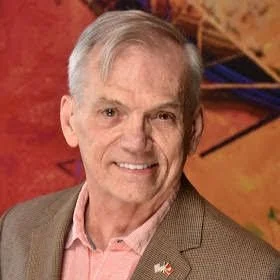
Keith A. Cole is a Marine Corps Vietnam combat veteran, retired CPA, author, and speaker who helps people understand the hidden costs of trauma, chronic pressure, and self-reliance. After experiencing severe burnout himself, Keith now shares a message of faith, surrender, and practical daily renewal to help people who appear strong on the outside but are quietly exhausted within discover hope, healing, and renewed purpose.